




Inside the LED Stage: Technology, VFX and AI in Real-Time Filmmaking
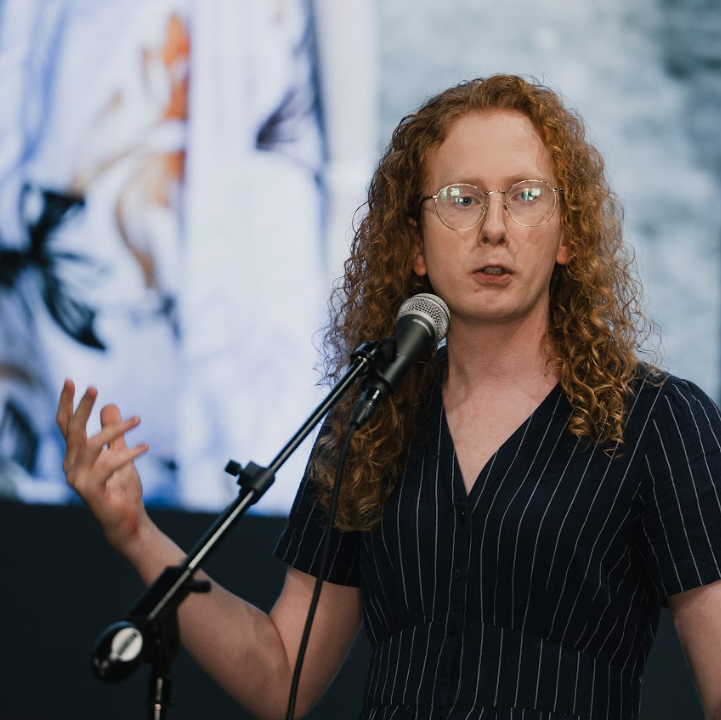
Day 6 of the DIGITALENT Academy Bootcamp offered a detailed journey inside the LED stage-examining not only what virtual production can achieve, but also how its individual technical and creative components must work together to produce a convincing final image.
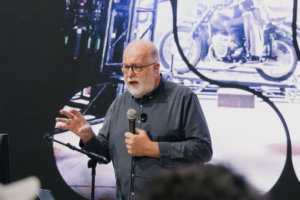
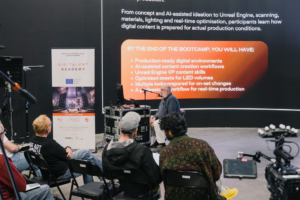
The day began with a 45-minute presentation by Pedro Barbadillo, who introduced the second DIGITALENT bootcamp, Create Digital Worlds, which will take place in Palma de Mallorca. Pedro presented its educational concept, complete programme and individual training modules, while also introducing the trainers and international guest speakers who will lead the sessions. Participants received a detailed overview of how the Mallorca bootcamp will focus on designing, building and optimising digital environments for virtual production, Unreal Engine and emerging AI-assisted creative workflows.
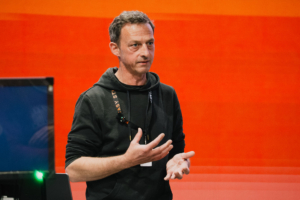

The main morning programme was then led by Lukáš Skalník, Lukáš Fišárek and Michal Svoboda, bringing together technological expertise, visual storytelling and practical filmmaking experience.
Rather than approaching the LED wall simply as a large display, the trainers examined it as a complex production system. Michal Svoboda showed participants an actual LED module and explained its physical construction: the individual panels, pixels, data connections, power distribution, processing units and structural elements from which a complete LED wall is assembled. This made it possible to understand what is normally hidden behind the final image-including the extensive technical infrastructure visible from the back of the stage.


A key part of the workshop focused on synchronisation. For an LED stage to function correctly, the LED processor, refresh rate, camera frame rate, shutter, tracking data and image-rendering system must operate within the same precisely coordinated timing structure. Even a small mismatch can produce flickering, scan lines, tearing, colour inconsistencies or visible delays between the physical camera movement and the virtual environment. Participants learned why technologies such as genlock are essential for keeping the camera, LED wall and real-time content in step with one another.
The workshop also explored the role of the Director of Photography (DoP) and the creative decisions that must be made when shooting against an LED wall. Camera position, lens choice, focal length, depth of field, exposure, framing, movement and lighting all influence whether the physical and digital parts of the scene appear to belong to the same world. The LED stage does not simply provide a background: it becomes an active source of light, colour and reflections that directly affects actors, costumes, props and vehicles.
An important part of the discussion compared LED-based virtual production with more traditional VFX and green-screen workflows. The trainers demonstrated how an LED stage can provide filmmakers with a result that is already much closer to the final image during shooting. Directors and cinematographers can immediately see the relationship between actors, camera movement, lighting and the digital environment, while performers can react to a visible world instead of imagining one against a green background.
At the same time, the workshop made clear that LED stages are not an automatic replacement for VFX. They require extensive preparation, calibrated colour management, precise synchronisation and close collaboration between departments. Resolution, pixel pitch, moiré, viewing angles, stage dimensions and the distance between the camera and the wall all impose practical limitations. Virtual production therefore works best as a carefully designed hybrid process in which in-camera effects, real-time environments and traditional post-production complement one another.
The trainers also discussed the growing role of artificial intelligence within this workflow. AI can support early visual research, concept development, rapid environment variations, previsualisation and selected stages of asset creation. It can accelerate experimentation and help filmmakers explore multiple visual directions before committing resources to a final virtual environment. However, the session emphasised that these tools still depend on strong artistic direction and technical supervision: speed alone does not create a coherent cinematic world.


From 14:00 to 17:00, the programme continued with Emma Theis Berthelsen, an independent Virtual Production Supervisor with more than ten years of experience in immersive storytelling, film technologies and real-time production.
Emma’s expertise spans ICVFX, LED stages, Unreal Engine, AR/VR and 360° video. She founded Trida Media, worked as a virtual reality consultant and currently serves as Chief Technology Officer at Norse Theme Parks. Her international professional experience includes collaborations with Amazon Studios, NBCUniversal and Netflix.
Using concrete production layouts and virtual set simulations, Emma demonstrated how a project moves from an initial creative idea to a spatially and technically workable virtual production setup. Her examples showed how the digital environment, physical set, LED wall, performers and camera positions must be designed as parts of a single system. She also addressed the importance of communication between creative and technical departments, particularly when decisions made in a virtual environment have immediate consequences for the physical shoot.
The sixth day revealed the LED stage from the inside out—from the construction of an individual panel and the precision of synchronisation to cinematography, VFX strategy, film simulation and AI-assisted design. It demonstrated that successful virtual production is not defined by one technology alone. It emerges from the collaboration of filmmakers, artists and engineers who understand both the creative possibilities of the image and the complex system that makes it possible.


Leave a Reply
Want to join the discussion?Feel free to contribute!