




BOOTCAMP No. 2 CREATE DIGITAL WORLDS
What Is It About
This bootcamp takes participants through the creative and technical pipeline behind Virtual Production, from the first visual idea to a production-ready world inside Unreal Engine.
Over the week, you’ll explore how AI-generated ideas, 3D assets, scans, materials, lighting and environments come together for real-time filmmaking and LED-stage workflows. You’ll learn not only how to make things look good, but how to make them work on set — with the right performance, scale, organisation and flexibility. With hands-on workshops, demos and guidance from experienced tutors, you’ll build and refine your own virtual production content, experimenting with Generative AI while learning practical Unreal Engine workflows, look development and real-time optimisation.
By the end of the bootcamp, you’ll have a production-ready world package and a clearer understanding of how creative content moves from concept to camera.
Participants will:
- Create and optimise Virtual Production-ready environments and assets
- Explore Generative AI for concept development, lookdev and creative iteration
- Translate AI-generated references into practical Unreal Engine workflows
- Work with scans, procedural elements and hybrid assets in real-time environments
- Learn how lighting, materials, reflections, scale and performance affect content on LED stages
- Build multiple visual variations while keeping real-time performance under control
- Use key Unreal Engine tools such as Sequencer and Virtual Camera for cinematic workflows
- Develop organised project structures, versioning and content packages designed for real production
- Apply sustainability thinking to digital production, from efficient workflows to reuse and reduction
Each participant receives a Certificate of Professional Competence in Virtual Production, aligned with the focus of the bootcamp.
Week Structure
Seven days of creative development, technical workshops and real-time production practice.
Day 1 – Virtual Production Content Pipeline
TUTORS · Roni Rodriguez & Jan Adamus
- What makes content VP-ready
- The role of data, organisation and versioning in production
- Differences between VFX, game and Virtual Production assets
- Performance, scale, realism and on-set constraints
- Introduction to Unreal Engine and real-time environment building
- Sustainability and efficient digital production workflows
Day 2 – Generative AI for Virtual Production
TUTORS · Ivan Garriga & Jan Adamus
- Generative AI for concept development and lookdev
- Using image, video, 3D and text-based AI tools
- Developing consistent visual directions with AI
- Prompting and controlled creative iteration
- Translating visual references into production ideas
- Ethical, legal and copyright considerations
Day 3 – AI-Assisted Environment Creation
TUTORS · Josep Antoni RR & Ake More
- Turning AI references into usable production assets
- Generating textures, skies, environments and visual references
- Exploring AI-assisted approaches to terrain, foliage and architecture
- Translating 2D ideas into 3D environment workflows
- Building Unreal Engine-ready content
- Creating and testing different visual variations
Day 4 – 3D Assets, Scans & Hybrid Workflows
TUTORS · Josep Antoni RR, Oscar Olarte & Ake More
- Introduction to photogrammetry and scan-based assets
- Combining scans with AI-generated and procedural content
- Cleanup, retopology and optimisation for real-time use
- Building hybrid environments and asset sets
- Maintaining visual consistency across different content sources
- Preparing assets for integration into Unreal Engine
Day 5 – Green Production & Unreal Engine for Virtual Production
TUTORS · Paloma & Ramon Olivero
- Sustainability as a practical part of digital production
- Energy efficiency, reuse and smarter iteration
- Connecting sustainability with AI, VFX and Virtual Production
- Making production decisions with time, budget, risk and footprint in mind
- Unreal Engine as the VP execution and integration layer
- Bringing together scans, AI-assisted assets and hybrid content
- Preparing and organising real-time environments
- Introduction to VP workflows, tools and production logic
- Real-time lighting, materials and look development for LED and camera workflows
- Virtual Camera, Sequencer and real-time scene control
Day 6 – Real-Time Look Development & VP Workflows
TUTORS · Ramon Olivero
- Building and refining VP-ready environments in Unreal Engine
- Integrating AI-assisted, scanned and hybrid assets
- Materials and look development for LED and camera workflows
- HDRI-based lighting
- Lumen, global illumination, reflections and shadows
- Balancing visual quality with real-time performance
- Identifying and troubleshooting common VP issues
- Creating multiple looks for creative flexibility
- Camera iteration, shot blocking and real-time previs
- Sequencer and Virtual Camera workflows
- Preparing a clean, documented on-set content package
Day 7 – Showcase, Review & Certification
TUTORS · Josep Antoni RR, Ake More & Ramon Olivero
- Presenting the final virtual production world
- Practical assessment of the completed workflow
- Reviewing stage readiness, performance and creative flexibility
- Structured feedback from the tutors
- Final improvements and presentation
- Certification and closing
PROGRAMME DETAIL
A closer look at the learning journey across the week.
Day 1 — Virtual Production Content Pipeline
With Roni Rodriguez & Jan Adamus
The week starts by looking at what it really means for content to be ready for Virtual Production. With Roni Rodriguez, participants explore the production mindset behind VP workflows — from stage readiness and realism to camera movement, practical filmmaking constraints and collaboration between departments.
Jan Adamus then introduces participants to Unreal Engine, helping them understand the basic project structure and begin building their first environment. The day establishes the foundations for organised, production-friendly content while introducing the importance of scale, performance, versioning and efficient workflows.
Day 2 — Generative AI for Virtual Production
With Ivan Garriga & Jan Adamus
Generative AI becomes a creative tool for developing ideas, references and visual directions. Ivan Garriga introduces participants to AI as a controlled design and look-development tool, exploring how to create consistent results rather than relying on endless experimentation.
The practical session with Jan Adamus takes these visual ideas into Unreal Engine. Participants explore how references can inform materials, lighting, reflections, atmosphere and composition, while beginning to consider what is required to make an AI-inspired visual direction work in a real-time environment.
Day 3 — AI-Assisted Environment Creation
With Josep Antoni RR & Ake More
The focus moves from AI-generated ideas towards Unreal Engine-ready building blocks. Josep Antoni RR explores how AI references can be translated into practical materials, textures, skies and environment elements, with particular attention to coherence, scale and controlled detail.
Working with Ake More, participants continue developing their environments in Unreal Engine, testing composition and camera paths while creating different visual variations. The aim is to turn creative experimentation into content that can function within a real-time production workflow.
Day 4 — 3D Assets, Scans & Hybrid Workflows
With Josep Antoni RR, Oscar Olarte & Ake More
Day 4 explores reality capture and scan-based content as part of the Virtual Production pipeline. In the lecture and masterclass, Josep Antoni RR and Oscar Olarte introduce photogrammetry and scan data as production assets, looking at how they can be combined with AI and procedural tools to build richer, more flexible digital environments.
In the afternoon, Ake More continues the hands-on Unreal Engine workshop started on Day 3, helping participants bring these new elements into their existing environments. The focus is on integrating scan-based, AI-assisted and procedural content, while cleaning up, optimising and refining assets for real-time use.
By the end of the day, participants will have further developed their environments and a clearer understanding of how different content-generation methods can work together within a production-ready Virtual Production workflow.
Day 5 — Green Production & Unreal Engine for Virtual Production
With Paloma & Ramon Olivero
Day 5 connects the creative possibilities of Virtual Production with the realities of production. In the morning, Paloma introduces a practical approach to sustainability, looking at how energy use, reuse, travel, iteration and workflow choices can influence the environmental impact of digital production. Participants explore how sustainability connects with AI, VFX and Virtual Production, and how creative and technical decisions can also be evaluated through time, budget, risk and footprint.
In the afternoon, Ramon Olivero begins the Unreal Engine integration module. Participants start bringing together the content developed during the previous days, using Unreal Engine as the execution layer for Virtual Production. They work with real-time environments, VP-ready assets and production-oriented project organisation, while being introduced to lighting, materials, Virtual Camera and Sequencer workflows.
Day 6 — Real-Time Look Development & VP Workflows
With Ramon Olivero
Day 6 continues with Ramon Olivero, taking participants deeper into the practical Unreal Engine workflows needed for Virtual Production. Using the assets and environments developed throughout the week, participants refine their scenes and explore how materials, lighting, reflections, shadows and global illumination behave in real-time and under camera conditions. The focus is not simply on making an environment look impressive, but on making it stable, flexible and usable for production. Participants learn to balance creative quality with performance, troubleshoot common real-time issues and develop multiple looks that can be adapted to different on-set scenarios.
The day also brings together key cinematic workflows, including Virtual Camera, Sequencer, shot blocking and camera iteration. By the end of the module, participants package their work into a clean and documented environment ready for review and final presentation on Day 7.
Day 7 — Showcase, Review & Certification
With Josep Antoni RR, Ake More & Ramon Olivero
The final day is about bringing the week’s work together. Participants present their completed virtual production worlds and demonstrate how their content, assets and workflows have developed throughout the bootcamp.
Josep Antoni RR, Ake More and Ramon Olivero review the projects, providing structured feedback on creative quality, organisation, performance, stage readiness and flexibility. Participants complete their practical assessment before closing the week with certification and a final showcase.
HOW YOU’LL LEARN
The bootcamp combines focused technical sessions with hands-on studio practice. Participants apply AI-driven workflows, optimise assets for real-time rendering, and develop content with the practical constraints of an LED stage in mind.
Throughout the week, exercises mirror real production scenarios; from adapting to last-minute creative changes and performance limitations to working across camera, stage and content workflows. Participants work individually and in small teams, building both technical skills and the collaborative mindset required in contemporary Virtual Production.
WHO SHOULD JOIN?
This bootcamp is designed for creative and technical professionals who want to develop their skills in Virtual Production, Generative AI and Unreal Engine.
- Digital and environment artists
- VFX and technical artists
- AI creatives working with visual content
- Unreal Engine users developing film-ready assets
- Mid-career post-production professionals transitioning into Virtual Production
POTENTIAL CAREER PATHS
The skills developed during the bootcamp can support a range of roles across real-time and Virtual Production environments:
- Virtual Production Operator
- Media / Playback Operator
- Junior Virtual Production Supervisor
- Technical Artist
TRAINERS
Åke Mora Temnerud
Trainer, Create Digital Worlds
Game Developer, Creative Technologist & Studio Leader
Åke Mora Temnerud is a multidisciplinary game developer, artist and creative technologist with nearly twenty years of experience across video games, apps and audiovisual media. Combining a background in illustration, animation and art direction with senior leadership roles in development and publishing, he brings a rare end-to-end understanding of the game creation process.
Throughout his career, Åke has held key positions including Head of Studio at Targnarion Studios, Director of Publishing at BitBox Games and COO at TwinForce. He has led teams of more than fifty people and contributed to projects across Nintendo DS, Nintendo Switch, PC, Xbox and mobile platforms, as well as AR and VR experiences. Today, his work focuses on AI-assisted creative workflows, full-cycle game development and creative technology consulting. Passionate about the intersection of art and technology, Åke continues to teach, develop personal projects and explore how emerging tools can expand the possibilities of interactive storytelling.At Digitalent Academy, Åke shares practical insights from both the creative and business sides of game development, helping participants understand how ideas evolve into finished products and how new technologies—including AI—are reshaping the future of interactive media.

Oscar Olarte
Trainer, Create Digital Worlds
3D Assets, Scans & Hybrid Workflows
Óscar M. Olarte is CEO and co‑founder of MR Factory, a Madrid‑based studio specializing in virtual production, real‑time filmmaking, and AI‑driven content creation. With around 30 years of experience in digital media, he began his career developing flight simulation software and later expanded into broadcast graphics, visual effects, and feature‑film production.
He has led virtual production work for major projects, including Netflix series such as Sky Rojo and Money Heist, and large‑scale live events like the UEFA Champions League Final show featuring Marshmello, Selena Gomez, and Khalid. Recognized by Epic Games, NVIDIA, and Blackmagic Design, he is also a co‑author of the VES Handbook of Virtual Production.
Óscar M. Olarte is CEO and co‑founder of MR Factory, a Madrid‑based studio specializing in virtual production, real‑time filmmaking, and AI‑driven content creation. With around 30 years of experience in digital media, he began his career developing flight simulation software and later expanded into broadcast graphics, visual effects, and feature‑film production.
He has led virtual production work for major projects, including Netflix series such as Sky Rojo and Money Heist, and large‑scale live events like the UEFA Champions League Final show featuring Marshmello, Selena Gomez, and Khalid. Recognized by Epic Games, NVIDIA, and Blackmagic Design, he is also a co‑author of the VES Handbook of Virtual Production.

Josep Antoni Ribas Rosselló
Trainer, Create Digital Worlds
VFX Supervisor, Lead Compositor & Digital Artist
Josep Antoni Ribas Rosselló is a VFX Supervisor, Lead Compositor and Digital Artist with more than a decade of experience in film, television and music video production. Throughout his career, he has worked on international projects across a wide range of genres and production scales, contributing visual effects and compositing expertise to feature films and television series.
His credits include Indiana Jones and the Dial of Destiny, The Irishman, Slow Horses, The Lion King, Captain Marvel, Black Panther, The Favourite and Lost in Space. These productions span major studio films, streaming content and high-end television projects, reflecting extensive experience within professional visual effects pipelines.
Based in Spain, Josep specializes in VFX supervision, high-end compositing and on-set virtual production. His technical skillset includes NUKE, Unreal Engine, Blender and other industry-standard tools used in contemporary visual effects workflows.
Alongside his production work, Josep has taught postproduction and visual effects at Animum VFX School and CEF Media Arts School in Spain, sharing practical industry knowledge with aspiring artists and technical professionals.
At Digitalent Academy, Josep brings experience from international film and television productions together with expertise in modern compositing, visual effects and virtual production workflows, providing participants with direct insight into contemporaryVFX practices and technologies.
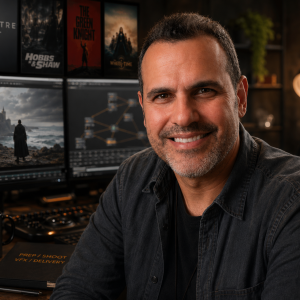
Roni Rodrigues
Trainer, Create Digital Worlds
Production VFX Supervisor
Roni Rodrigues is a Production VFX Supervisor with more than fifteen years of experience across feature films, high-end television and international productions.
Originally from Rio de Janeiro, Brazil, Roni began his career in the film industry working in production and editorial before relocating to the United Kingdom and specialising in Visual Effects. He graduated with distinction from the National Film and Television School (NFTS), where he focused on VFX and post-production workflows.
Since then, he has built an international career supervising visual effects on major studio and streaming productions, working closely with directors, cinematographers, production teams and VFX vendors from pre-production through final delivery.
His credits include Spectre, The Imitation Game, Fast & Furious Presents: Hobbs & Shaw, News of the World, The Green Knight, The Wheel of Time, Bridgerton, Queen Charlotte, Bob Marley: One Love and the Apple TV+/Skydance series 12 12 12.
Roni is particularly recognised for his production-side approach to visual effects, helping filmmakers integrate VFX seamlessly into the wider filmmaking process. His experience spans on-set supervision, virtual production workflows, environment integration, data capture, post-production strategy and cross-department collaboration.
Alongside his production work, Roni is a Visiting Tutor at Arts University Bournemouth (AUB) and an Industry Reviewer at the National Film and Television School (NFTS), where he supports the development of emerging artists and filmmakers.
At Digitalent Academy, Roni shares practical insights from real-world productions, focusing on what makes visual effects and virtual production workflows genuinely production-ready. His sessions explore the intersection of filmmaking, cinematography and VFX, helping participants understand how creative decisions translate into successful delivery on set and in post-production.

Jan Adamus
Trainer, Operate the LED Stage, Create Digital Worlds
VP Supervisor & Unreal Operator, Fantasy Studios
Jan Adamus is a VP Supervisor and Unreal Operator at Fantasy Studios, specialising in virtual production and real‑time environments built in Unreal Engine. For more than a decade he has been working at the intersection of art and technology – creating immersive digital worlds, projection‑mapping shows, interactive installations and tools that power real‑time and virtual production workflows. He is the creator of Just Assets, where he develops assets, tools and tutorials for Unreal Engine, and as an Unreal Engine Authorized Instructor he helps creators around the world speed up their workflow and gain real confidence in real‑time production.
His portfolio includes work for both Czech and international clients, including the Anthony Joshua x Under Armour virtual production campaign and collaborations with studios and artists across Europe. In the Operate the LED Stage bootcamp, Jan will guide participants from “what exactly is Unreal doing on this LED wall?” to building camera‑ready scenes: how to design environments for the lens, think about light, parallax and performance in real time, and collaborate with directors, DOPs and the VP team so that the LED stage becomes an active storytelling tool rather than just a pretty background.
Jan will also be a key trainer on the Create Digital Worlds bootcamp in Mallorca, where he will go deeper into building and optimising Unreal worlds themselves – from first layout through to final, production‑ready environments designed for virtual production and real‑time visuals. For participants of both bootcamps, this is a chance to learn directly from one of the most experienced real‑time environment creators working with Unreal Engine in our region, someone who uses the tool every day and actively shapes how others work with it.
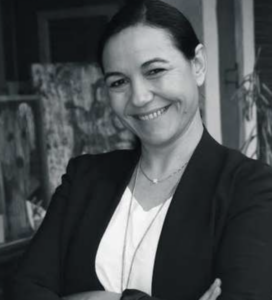
Paloma Urrutia
Trainer, Create Digital Worlds
Sustainability & International Development Professional
Paloma Andrés Urrutia is a sustainability and international development professional with more than 15 years of experience working as an entrepreneur and strategic and social consultant for companies, NGOs, public institutions and international development agencies. Her work focuses on creating practical solutions that connect social impact, sustainability and organizational strategy.
She is the founder of Fundación FUNCIONA, a centre dedicated to supporting people with disabilities living in extreme poverty, reflecting her long-standing commitment to social impact and inclusion. More recently, she has brought this experience into the audiovisual industry as co-founder of Mrs. Greenfilm and Fiction Changing the World, focusing on making sustainability an integral part of film and audiovisual production.
At Mrs. Greenfilm, Paloma works on sustainability applied to audiovisual productions and events, helping productions understand and reduce their environmental impact through rigorous data, realistic solutions and practical support throughout the production process. The company works with projects in Spain, Mexico and other countries, supporting productions in areas including ESG requirements, public funding opportunities and more efficient and responsible production models.
At Digitalent Academy, Paloma brings together her extensive experience in sustainability, social impact and strategic consulting with a practical understanding of the audiovisual industry. Her approach focuses on making sustainability measurable, achievable and relevant to real production environments, helping professionals understand how responsible practices can become an integral part of the creative and production process.
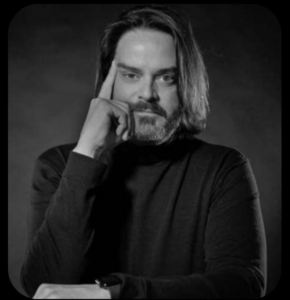
Ivan Garriga
Trainer, Create Digital Worlds
Filmmaker, Director, Producer & VFX Specialist
Ivan Garriga Simó is a filmmaker, director, producer and VFX specialist with more than 20 years of experience across advertising, film, television, music videos, documentaries and experimental audiovisual projects. Based in Barcelona, he combines creative direction and production with expertise in post-production, virtual production and emerging AI technologies.
In 2016, Ivan founded Pijama Studio, an AI and VFX post-production company working across advertising, fiction, music videos and digital content. Under his direction, the studio was nominated for Best Post-production Studio in Spain by the APCP in 2022. He has worked with global brands including Nike, Coca-Cola, Apple, Netflix, Audi, Microsoft, Sony, McDonald’s and Red Bull, among many others.
More recently, Ivan co-founded Caapsai, an AI-driven creative production lab where he works on AI and VFX workflows that combine traditional filmmaking with generative technologies. His expertise spans VFX supervision, virtual production, cinematography, colour grading and the development of efficient creative workflows that bring on-set production logic into post-production.
Since 2018, Ivan has also combined his professional career with university teaching at institutions including ELISAVA, ESCAC, LABASAD and UVic-UCC. At Digitalent Academy, he brings together decades of hands-on production experience with his knowledge of AI, VFX and virtual production, helping students understand how emerging technologies can be integrated into professional audiovisual workflows while maintaining strong creative and production standards.

Ramón Olivero
Trainer, Create Digital Worlds
Architect, CGI Artist, BIM Specialist & Technical Artist
Ramón Olivero is an architect, CGI artist, BIM specialist and technical artist with more than a decade of experience in architectural visualization, digital environments and real-time technologies. Originally from Venezuela, he graduated in Architecture from Universidad de Oriente in 2011 and began his career combining architectural design with 3D visualization and emerging digital tools.
He co-founded Métrica Estudio & Diseño Arquitectónico, where he led architectural visualization and worked across visual effects, animation, digitization and 3D technologies. He later became a Certified Autodesk Instructor and Certified Professional in Revit and 3ds Max, developing extensive expertise in BIM, architectural visualization and 3D modeling. From 2016 to 2019, he was part of the faculty at Universidad San Francisco de Quito, teaching BIM methodology and architectural visualization, while also working as a BIM consultant for architecture firms and businesses in Ecuador.
Since 2020, Ramón has expanded his practice into real-time technologies and technical art, specializing in Unreal Engine, V-Ray, Corona and other visualization tools. He has participated as an instructor and mentor in Epic Games’ Unreal Fellowship and worked on audiovisual projects for clients including Audi, HBO, ESA and Amazon Prime. He currently serves as Head of Studio and instructor at UT-HUB, where he teaches real-time environments, lighting, level design and 3D workflows.
At Digitalent Academy, Ramón brings together his architectural background, professional visualization experience and expertise in real-time technologies. His teaching focuses on practical production workflows, helping students and professionals bridge the gap between traditional architectural visualization and the evolving world of Unreal Engine and real-time 3D.

Alex CG Grau
Trainer, Create Digital Worlds
CG Supervisor & VFX Professional
Alex CG Grau is a CG Supervisor and VFX professional with more than twenty years of experience across feature films, high-end television and international productions. He has held senior roles including CG Supervisor, Associate VFX Supervisor, VFX Supervisor and Head of CG, combining hands-on work in lighting, look development and shot finaling with the leadership of teams of up to 28 artists.
His credits include The Buccaneers Season 2, Sentimental Value, Constellation, Queen Charlotte, Glass Onion, Foundation, The Wheel of Time, Fast X, Silo and News of the World, alongside more recent work on The Runner and Good People, Bad Things.
Alex works with Maya, Houdini, Houdini Solaris, USD-based workflows, Nuke, Unreal and Blender. His expertise spans asset development, lighting, FX, pipeline development and R&D. He brings a practical production approach to complex creative challenges, balancing image quality with schedules and technical requirements while supporting artists through mentoring and clear collaboration.
At Digitalent Academy, Alex shares insights into modern CG production, the collaboration between artists, supervisors and production teams, and how Houdini Solaris and USD are shaping contemporary VFX workflows.

