Bootcamp No.3, Day Seven: Filming Berlin in 1945 with Lukáš Skalník at Jordan Studios, 1 Nov 2026

1 Nov 2026 · Jordan Studios, Prague

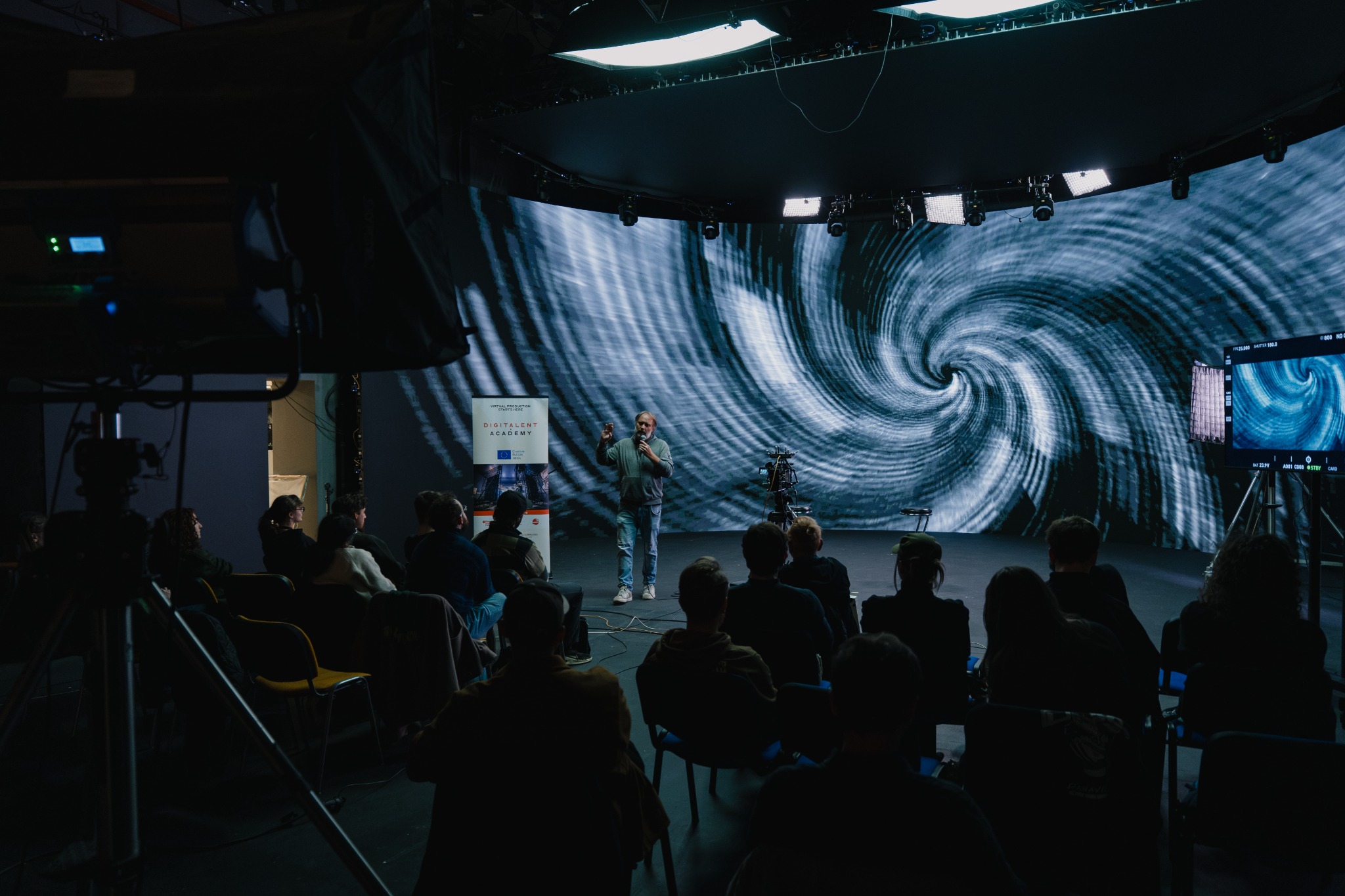
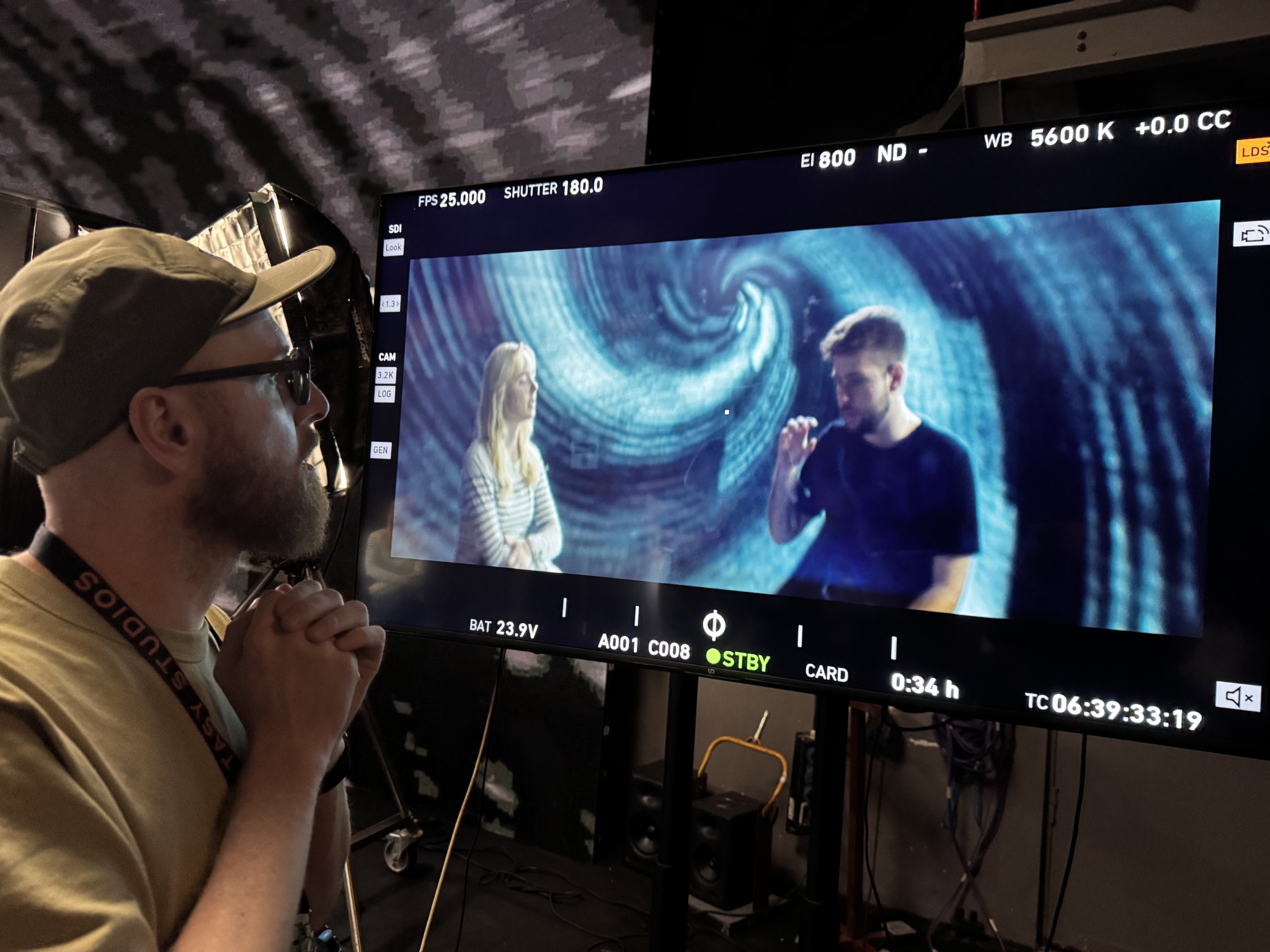
A bicycle wheel and a pile of rubble stood on the studio floor. Behind them, the curved LED wall carried the street into the distance, past shattered façades to the exposed steel ribs of a station roof. This was Berlin in 1945, the setting for the final morning of DIGITALENT Academy’s third bootcamp, Shoot Inside the Volume.
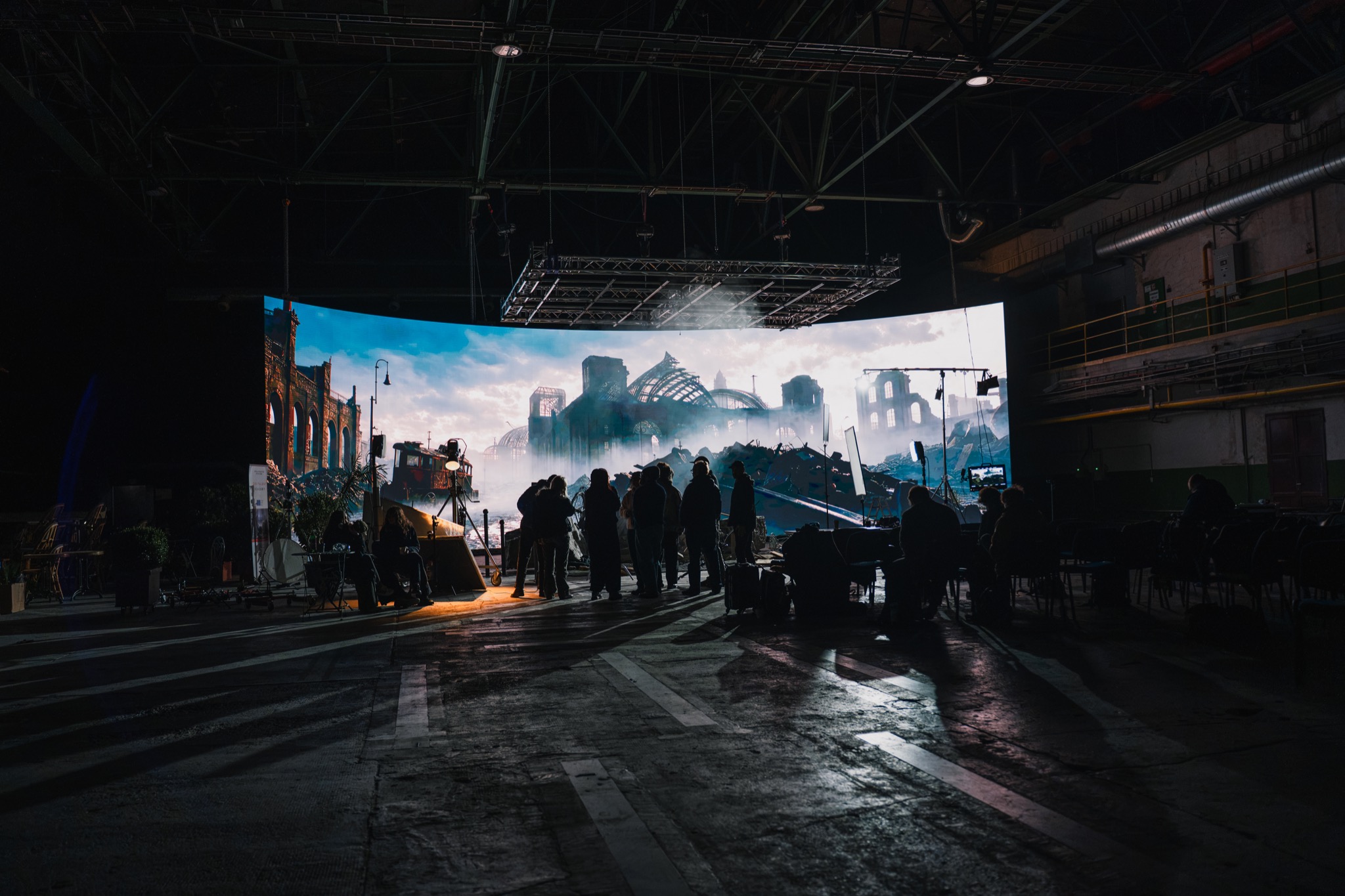
The curved LED wall extends the studio set into a ruined Berlin street.

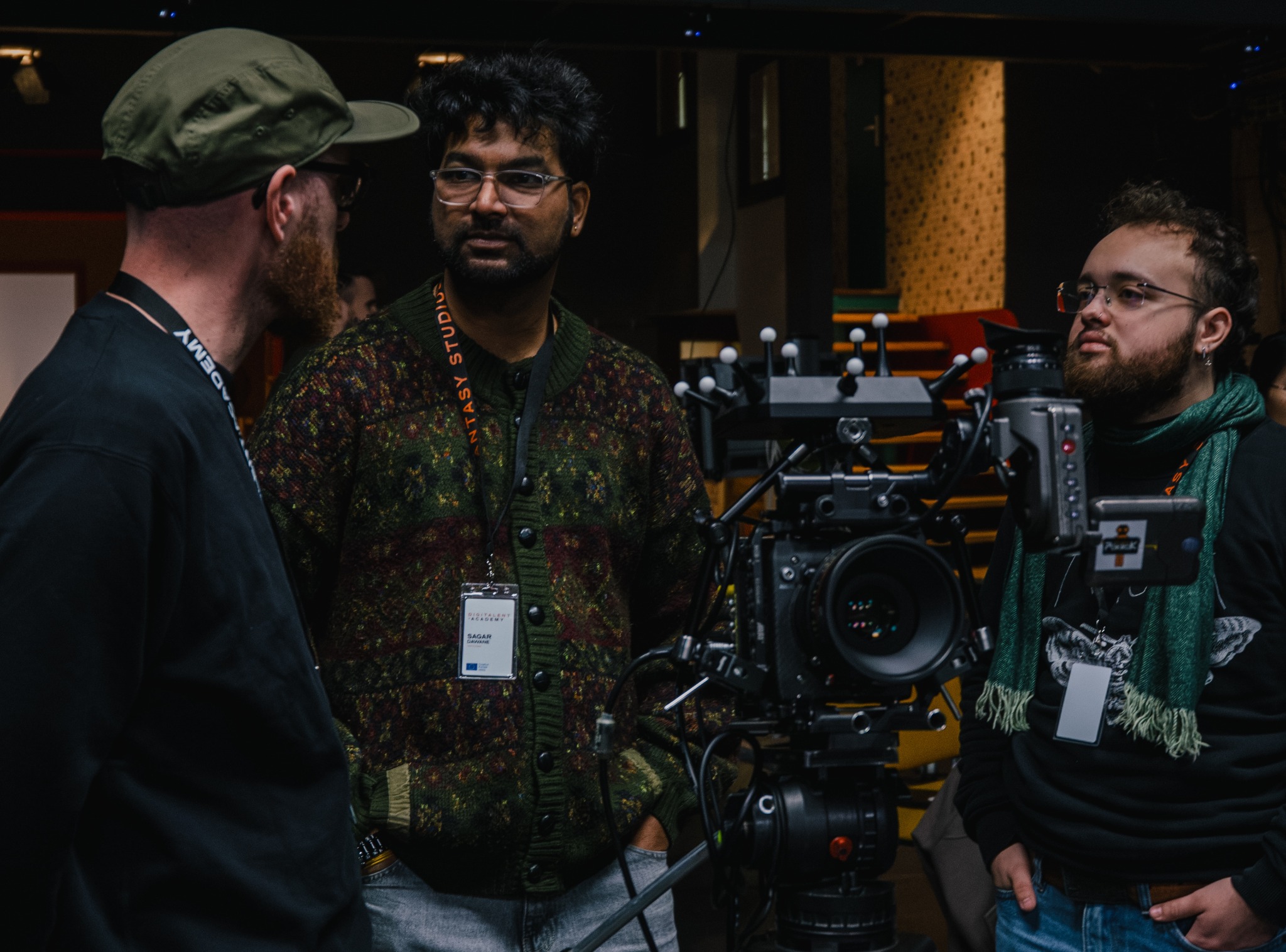
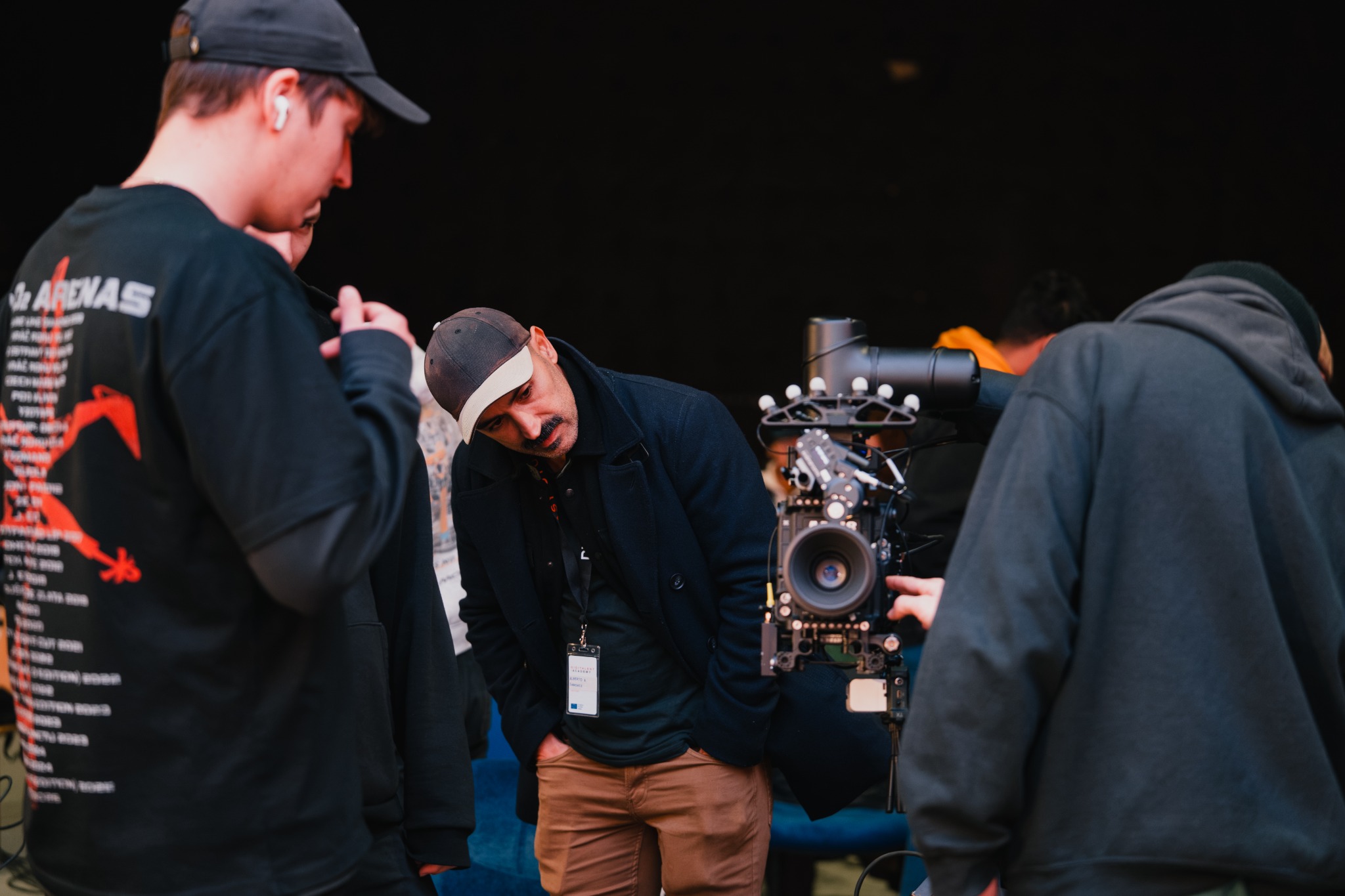
Lukáš Skalník, virtual production supervisor and Managing Director of Fantasy Studios, led the demonstration and practical exercises. The participants worked on a scene performed live. At the camera, they could see exactly where the physical set met the virtual street. Framing the bicycle wheel against the ruins gave the foreground a scale the audience could recognise. A shift in camera position changed how much of the street opened up beyond it.

Participants and their tutor check the camera framing during the Berlin scene.Lukáš Skalník positions a bicycle among the foreground rubble.

Smoke, fire and rain each posed a different question for the shot. How much of the distant station should remain visible through smoke? Where would firelight fall on a performer’s face? Against which part of the street would rain catch the light? With the action playing in front of the wall, the group could judge those choices in the camera image while the performers were still on set.

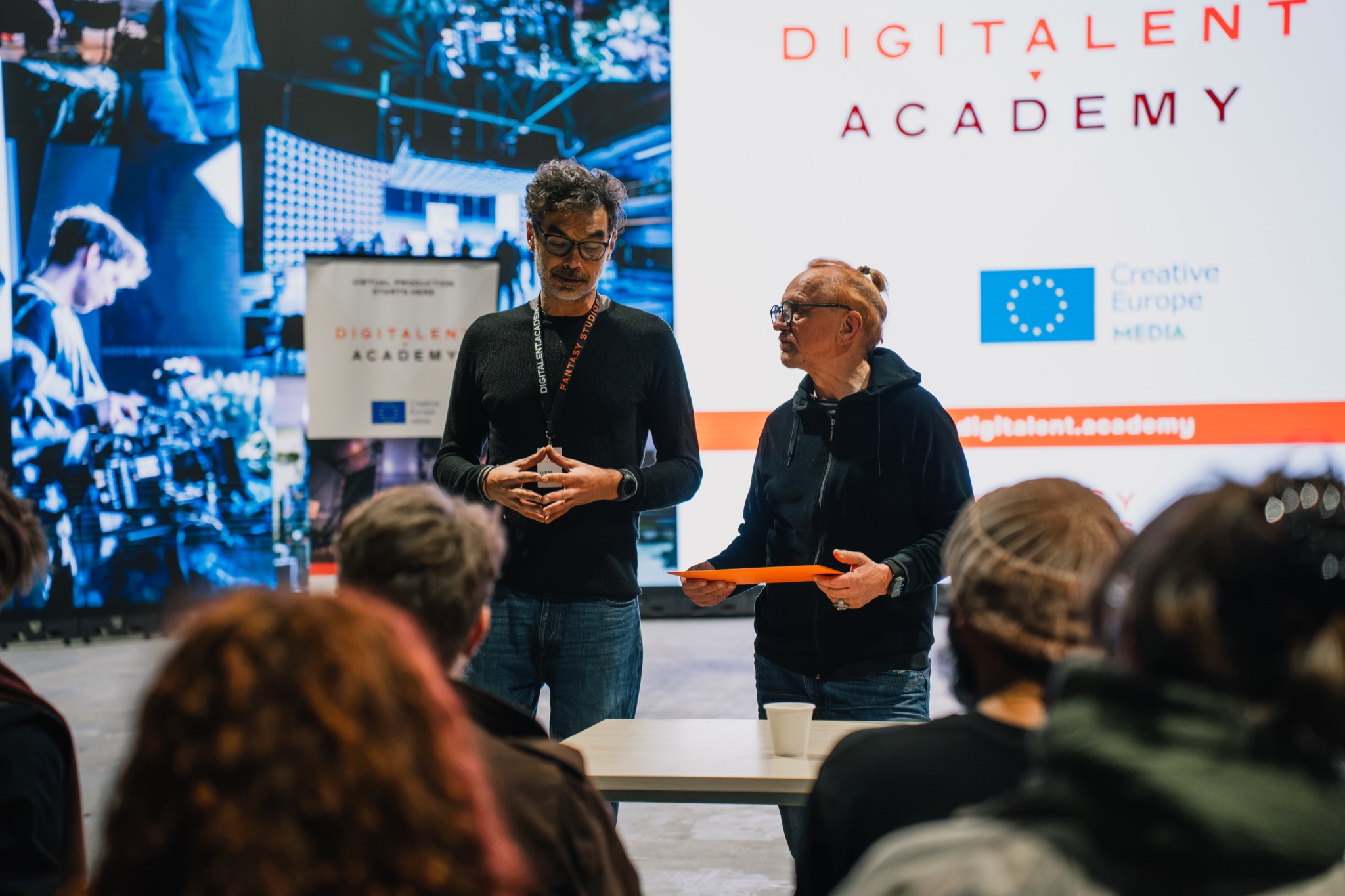
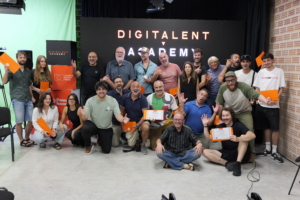
The day closed with the presentation of certificates. For the final group photograph, the Berlin street gave way to images from the week, and the participants took their own place in front of the LED wall.
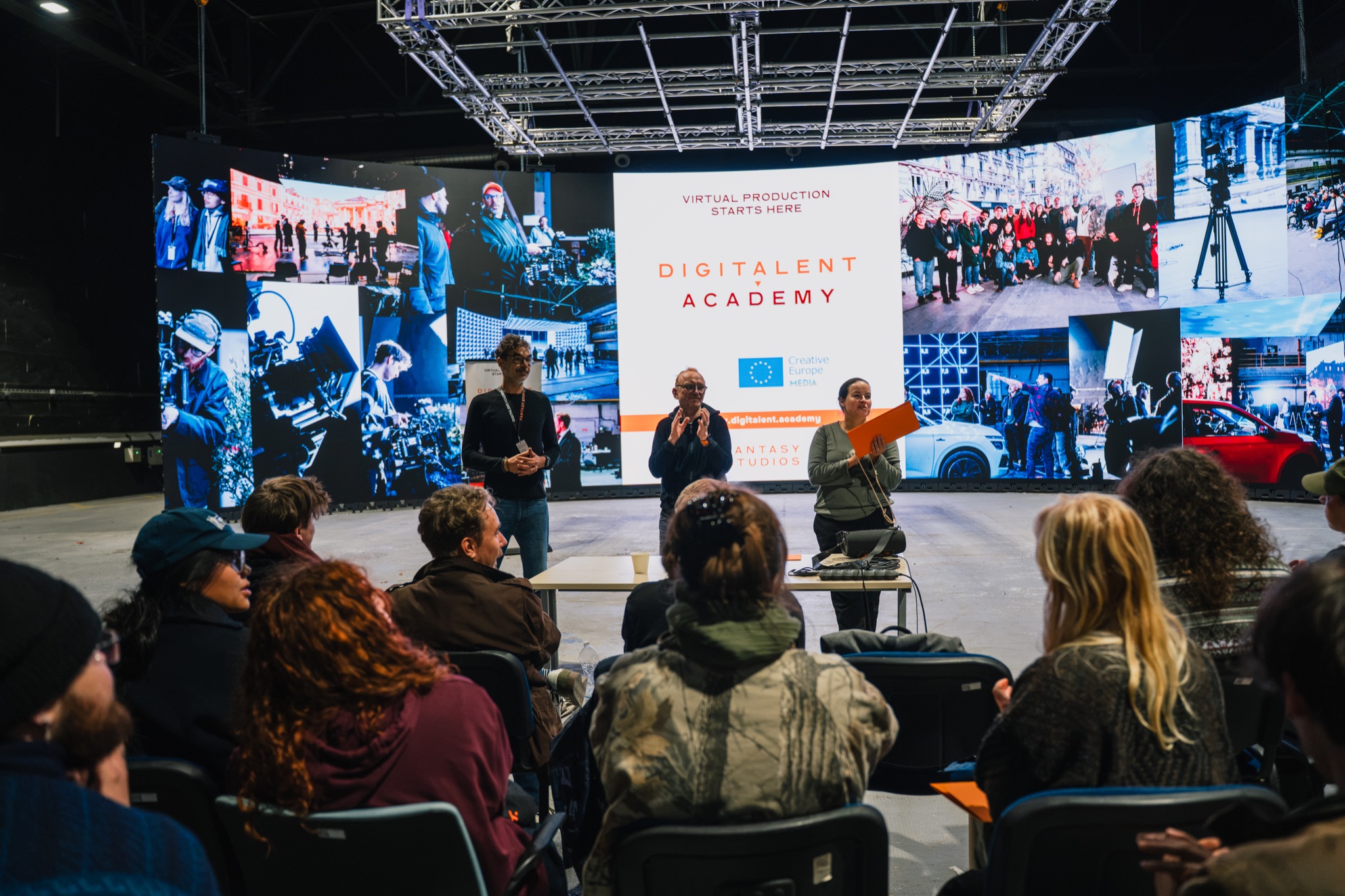
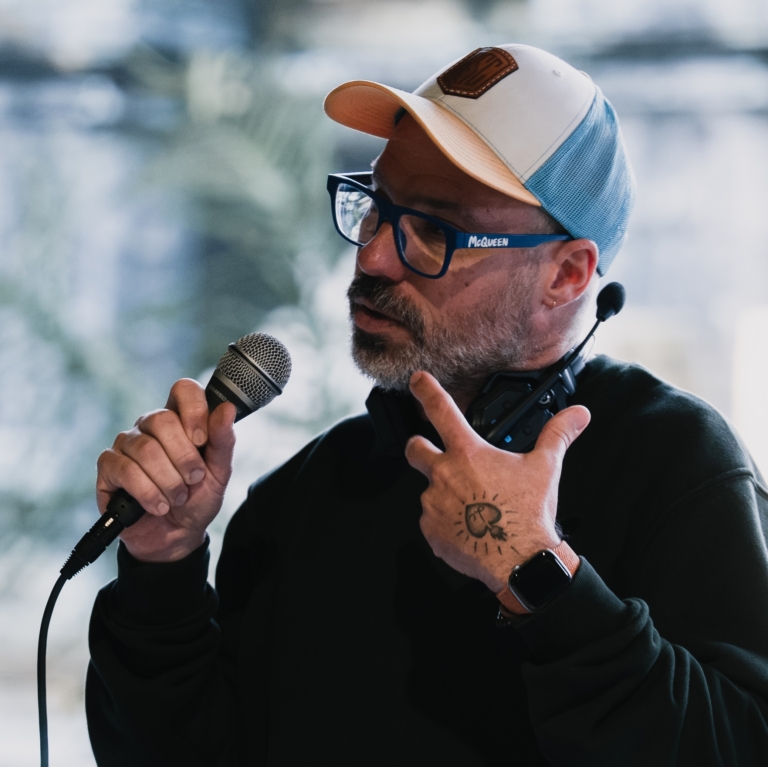
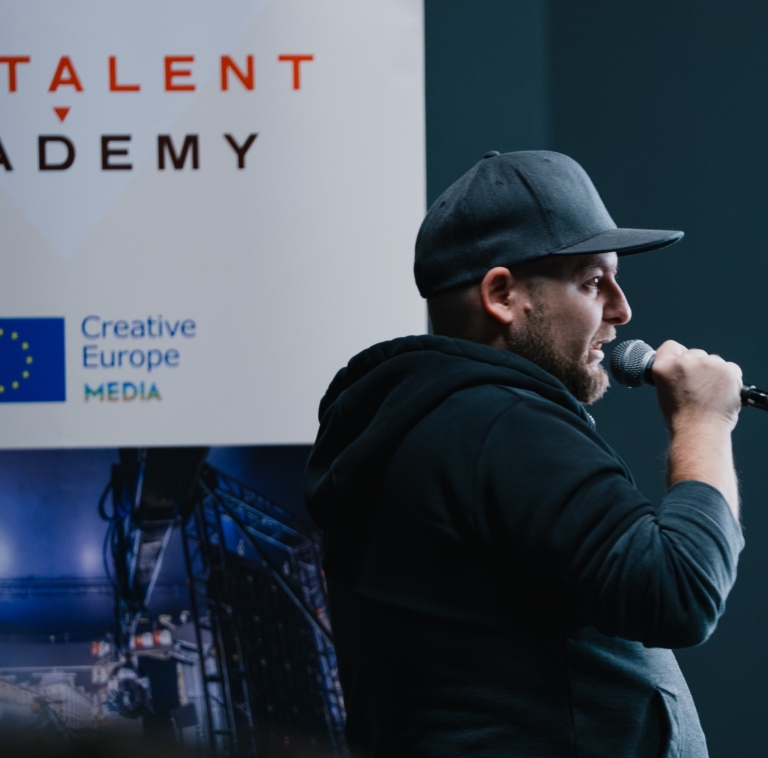
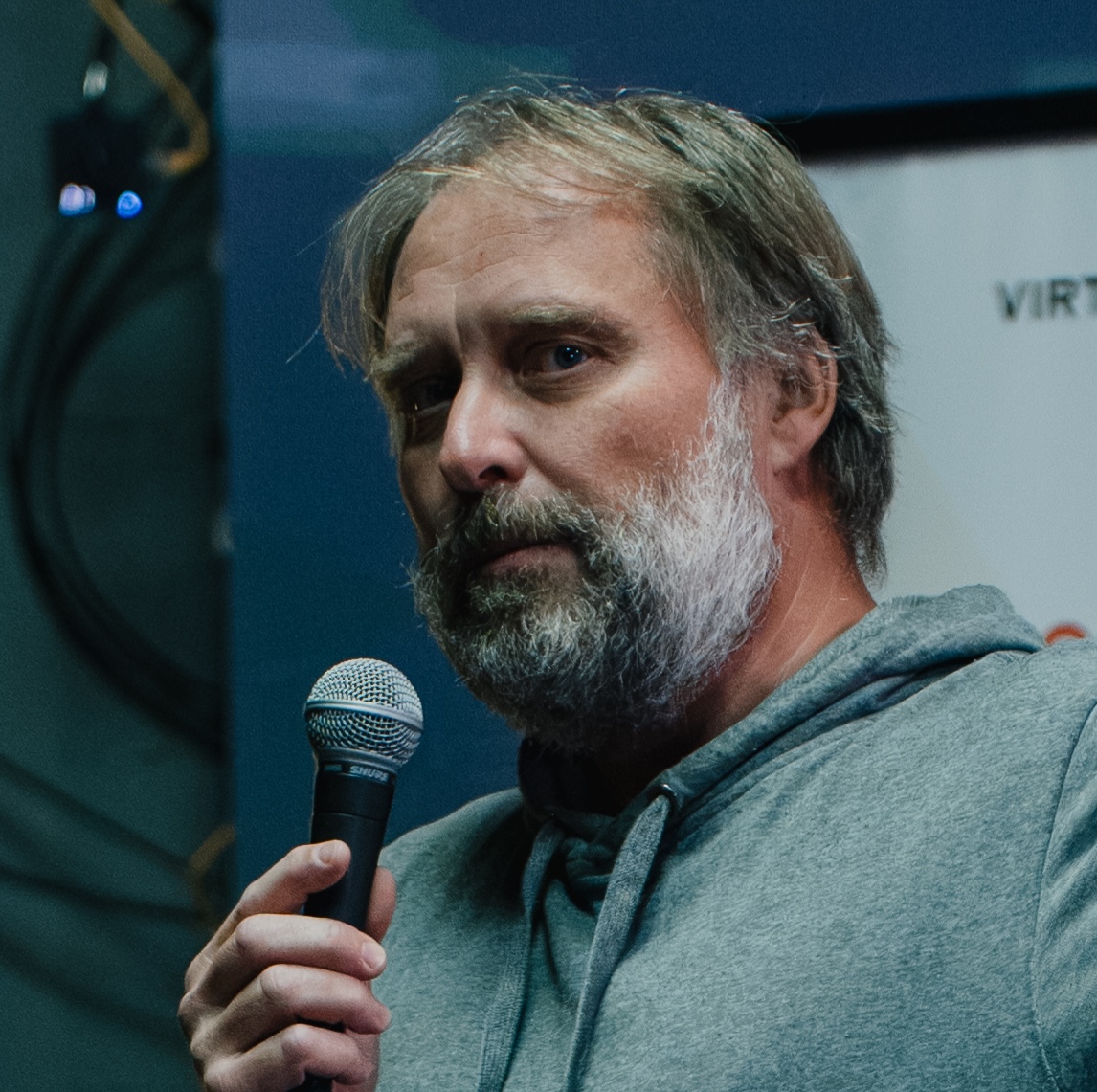
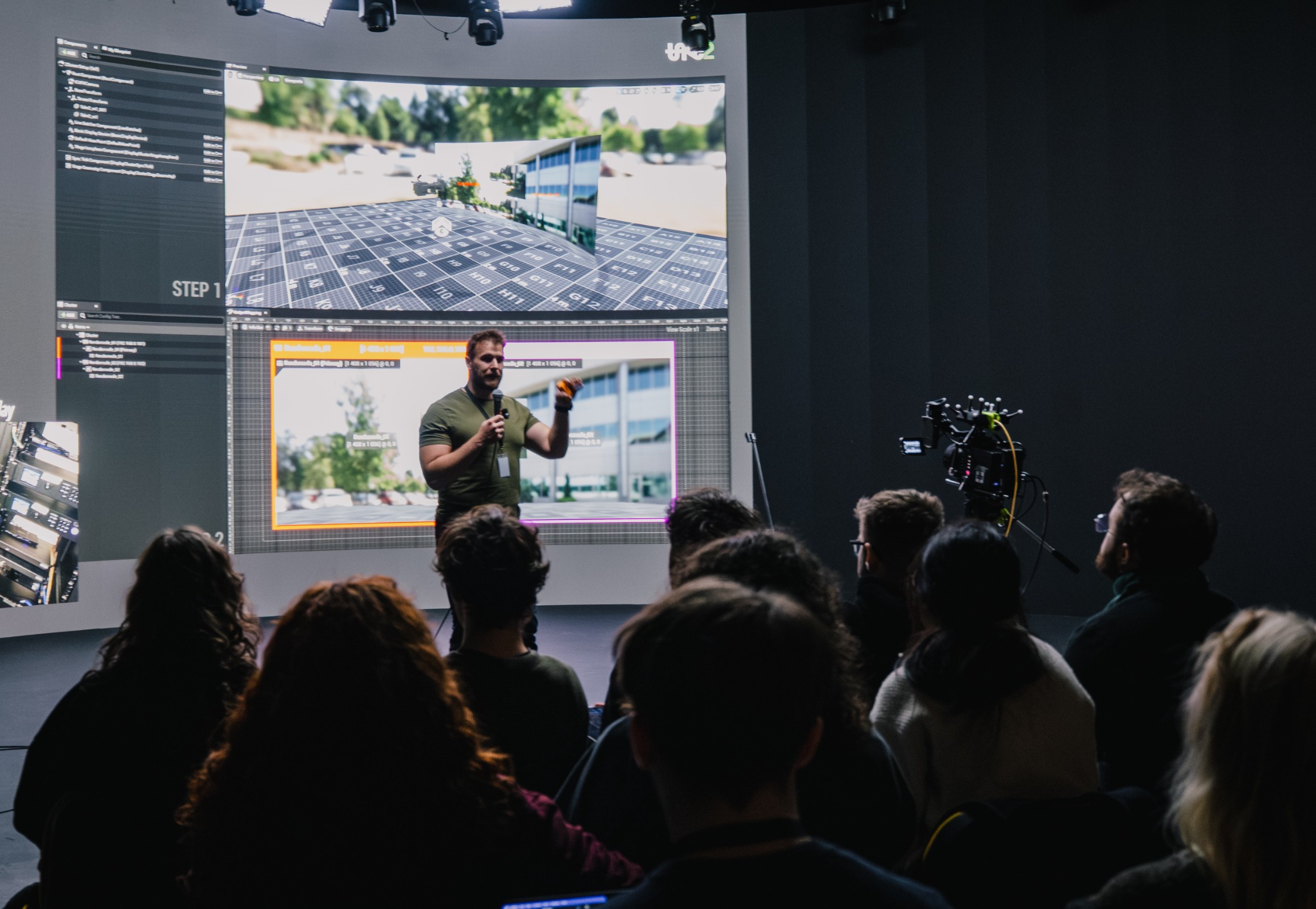
The group gathers in front of the LED wall for the closing session.Lukáš Skalník addresses the bootcamp participants.
A participant receives a certificate at the end of the bootcamp.Lukáš Skalník and Pavel Smetana at the certificate presentation.
Bootcamp No.3 participants and tutors with their certificates at Jordan Studios.

Bootcamp No.3, Day Six: Driving Plates and Virtual Production with Spencer Chase at Jordan Studios, 31 Oct 2026

31 Oct 2026 · Jordan Studios, Prague

On 31 October, the sixth day of Bootcamp No.3 – Shoot Inside the Volume, we welcomed Spencer Chase, a virtual production supervisor whose work connects real-time imagery with the practical demands of filming.

The morning combined theory, demonstrations and examples from professional productions. Spencer discussed his work as Engine Technical Director on the Apple TV series Hijack with Lux Machina, sharing a practical perspective on bringing digital imagery into a filming environment.

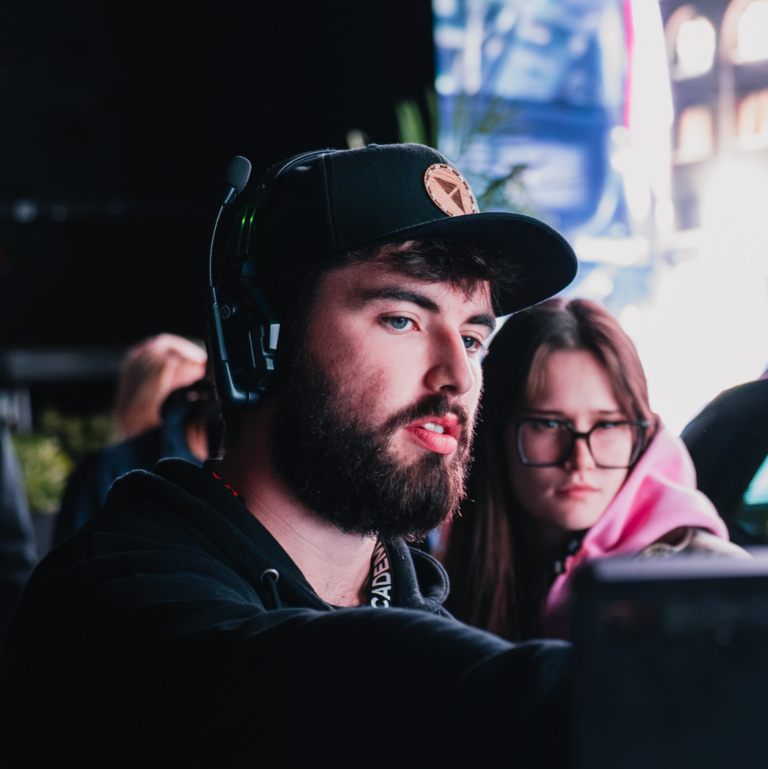
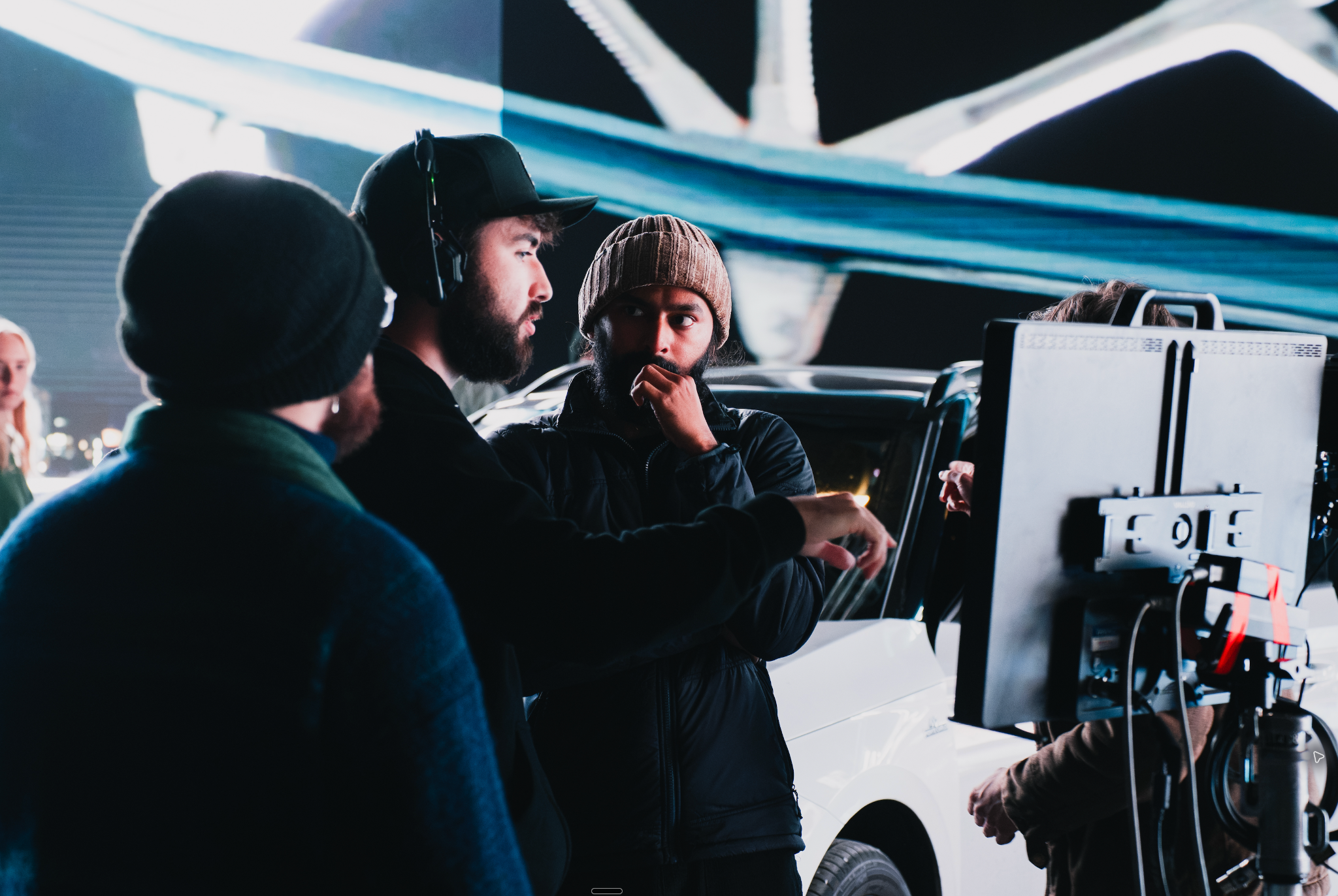
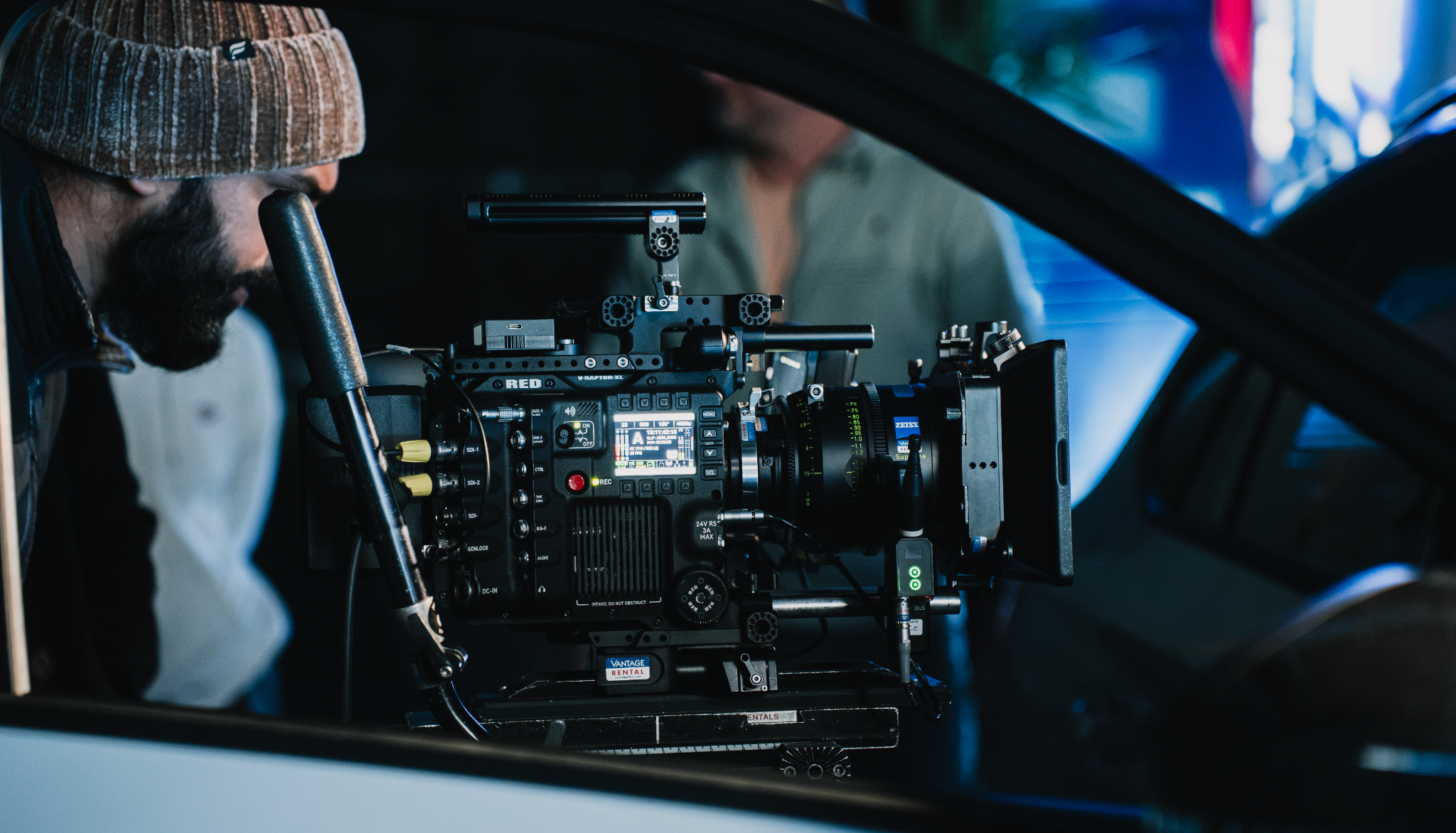
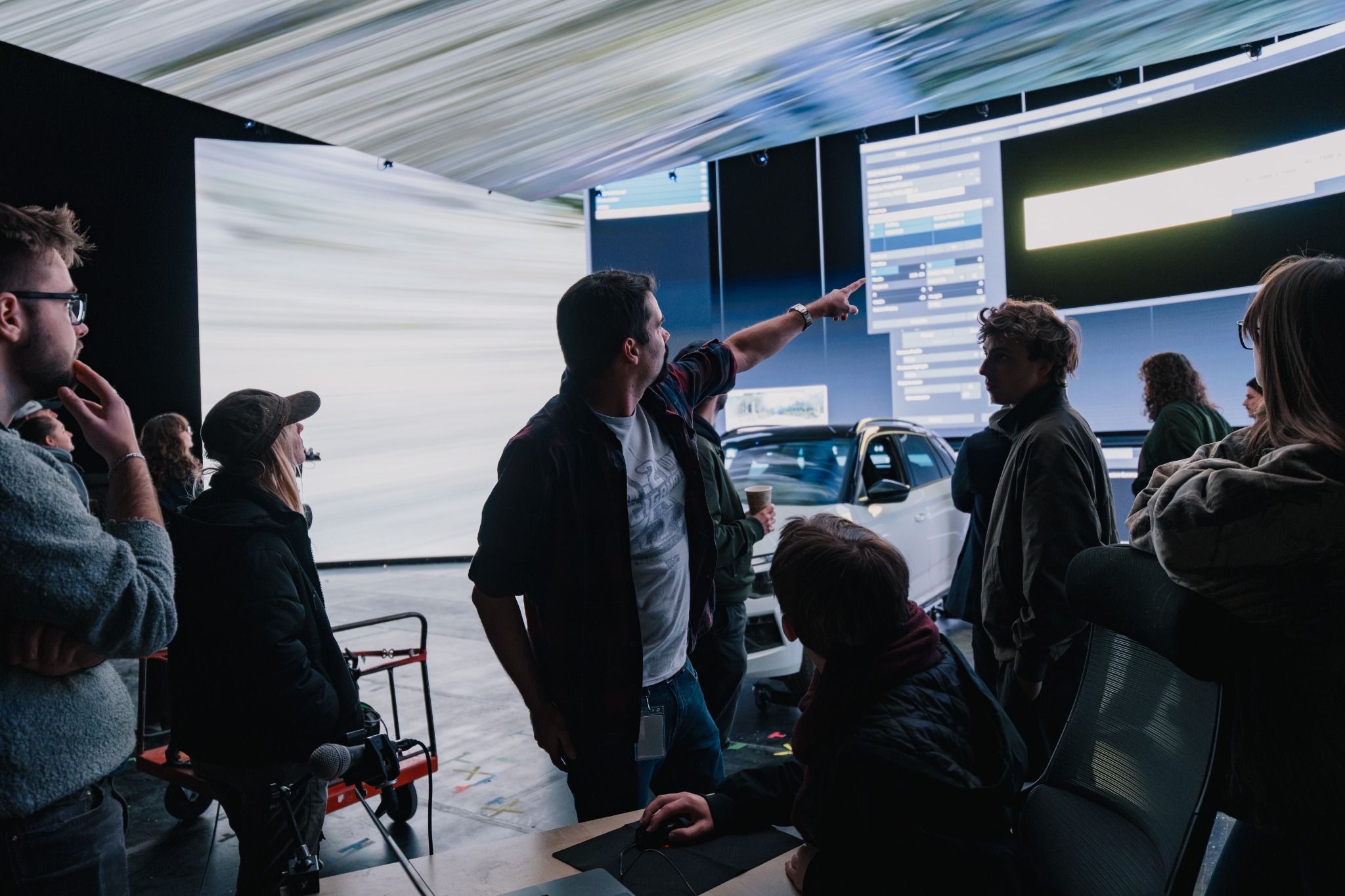
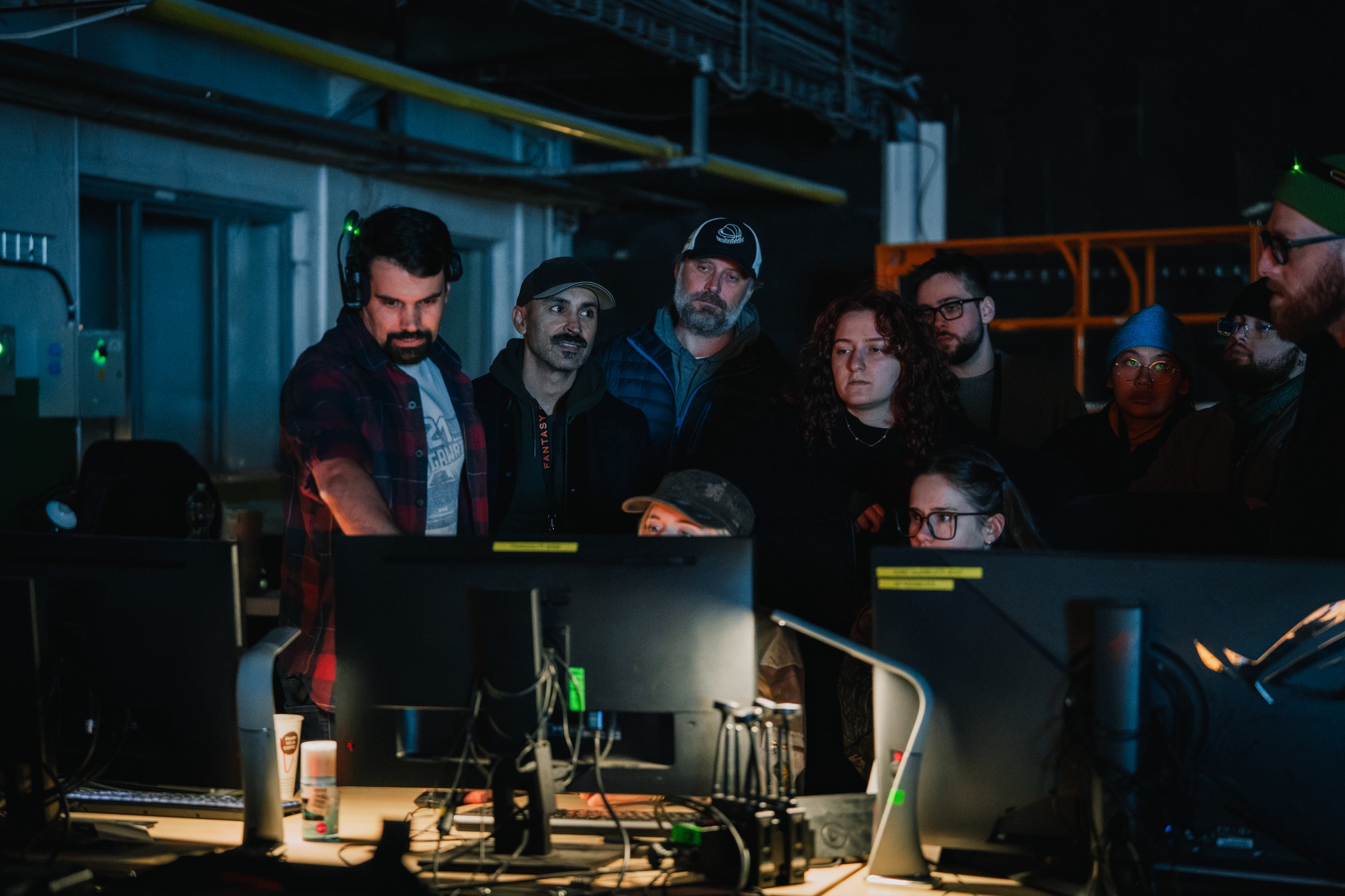
Spencer Chase working with participants beside the car on the virtual production stage.Participant reviewing the driving scene on a production monitor.

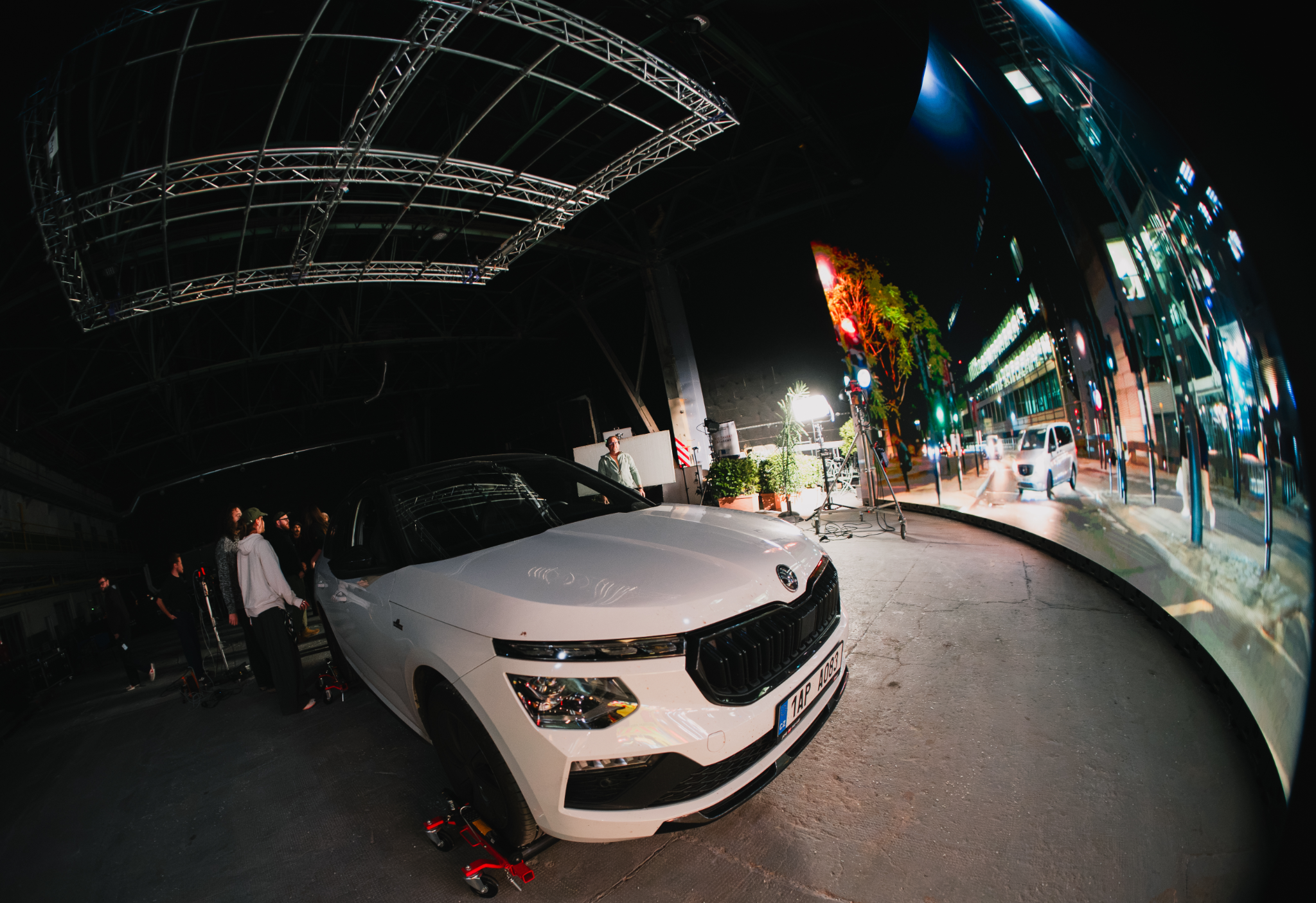
In the afternoon, participants moved on to practical exercises with a car and driving plates, using footage that Spencer had brought from London. Driving plates are moving background images used to create the impression of a journey while filming a vehicle inside the studio.

A car in the LED volume with a night-time driving plate at Jordan Studios.
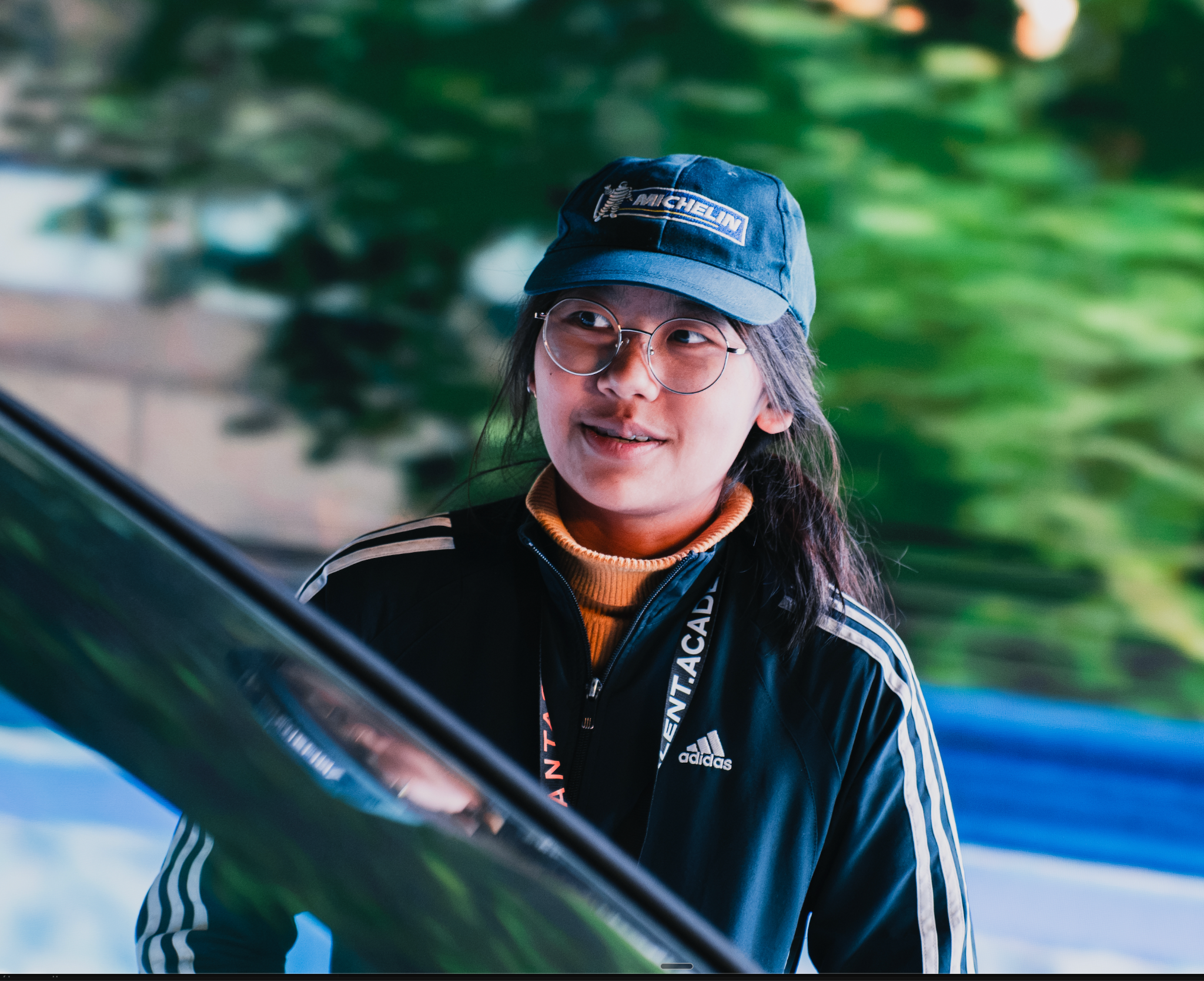
Cinema camera set up inside the car for the driving exercise.Participant beside the car with a moving landscape on the LED wall.
The session connected the morning’s explanations with hands-on work inside the volume, allowing participants to explore how the car, camera and moving background work together to create a convincing driving scene.

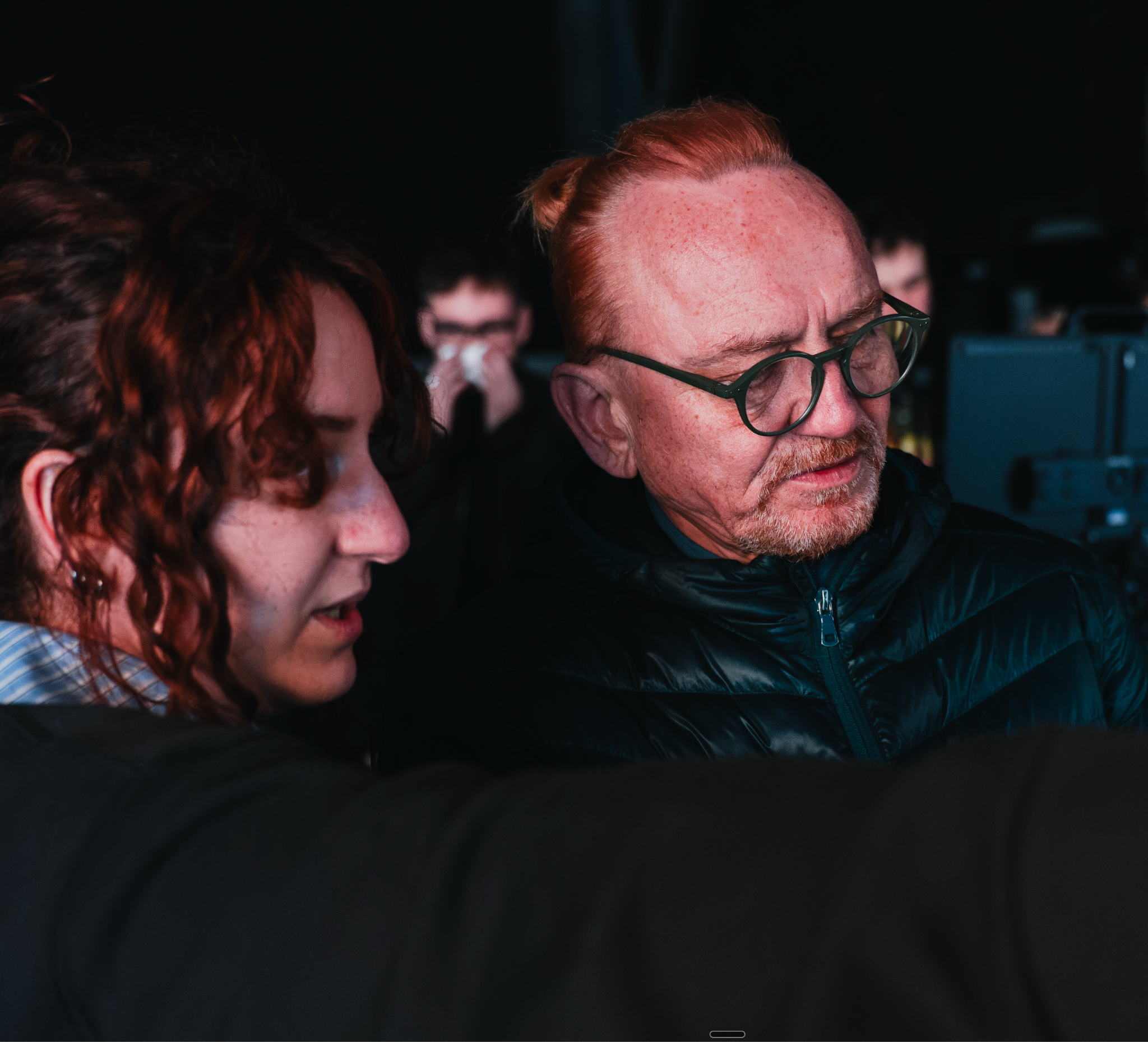
Participants reviewing the image together during the practical session.

Bootcamp No.3, Day Five: Cinematography and Virtual Production with Fabian Wagner at Jordan Studios, 30 Oct 2026


On 30 October, the fifth day of Digitalent Academy’s third bootcamp, we welcomed cinematographer Fabian Wagner ASC BSC to Jordan Studios in Prague for a masterclass exploring cinematography on a virtual production stage. Known for his work on Game of Thrones, Sherlock and The Crown, Fabian brought his experience to a practical session focused on visual storytelling, lighting, lens choice and camera movement.

Fabian Wagner explaining a cinematography setup during the Day Five masterclass
Camera setup during Fabian Wagner’s virtual production masterclass at Jordan Studios

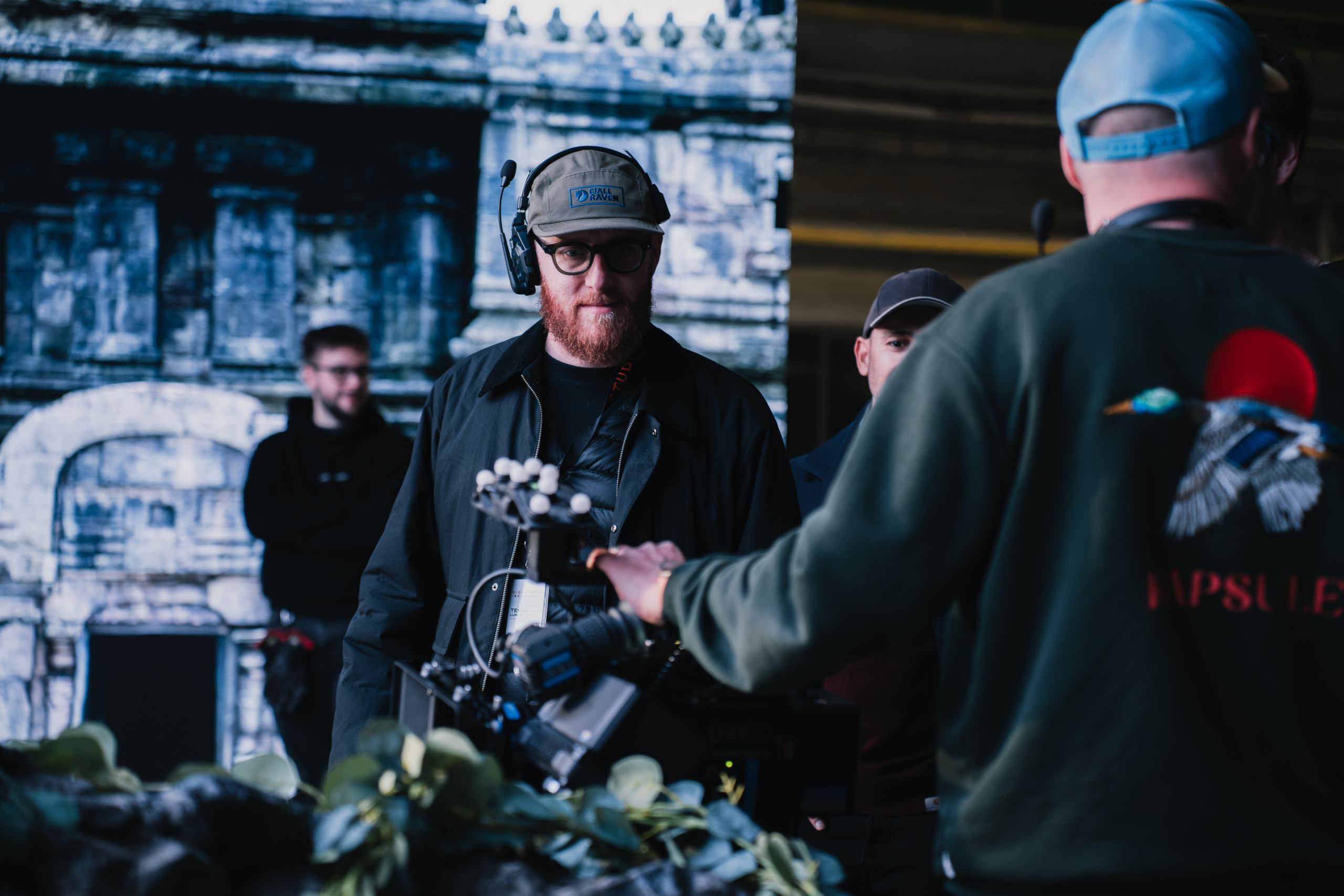
The day connected creative decisions with the practical demands of working in an LED volume. A virtual environment of ancient ruins provided the backdrop for demonstrations combining physical rocks, foliage and a live performer.

Participants gathered in the LED volume with a virtual environment of ancient ruins at Jordan Studios

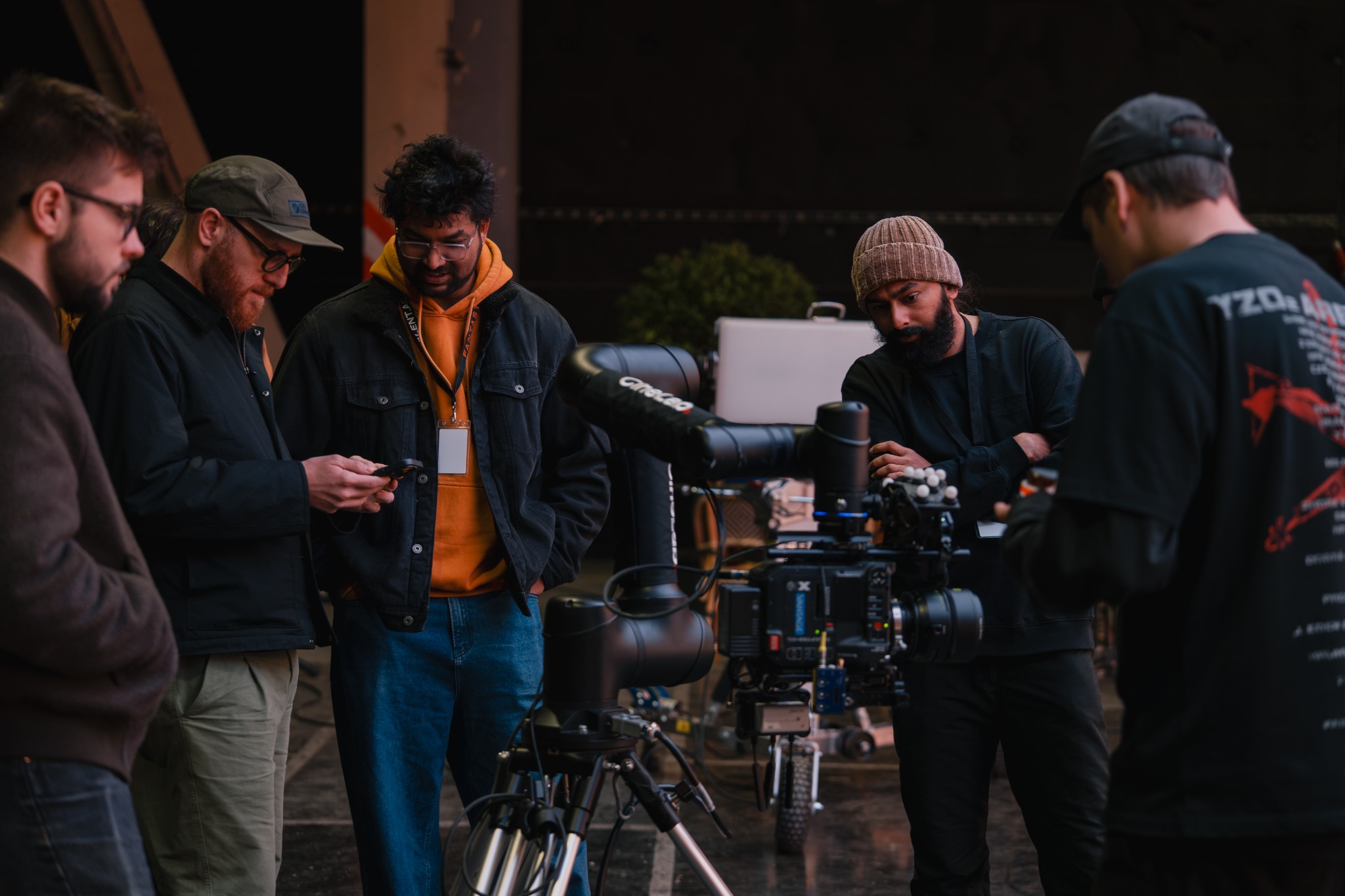
Participants gathered around the camera and monitors to follow the setup and examine how the physical foreground and digital background came together in the image. Seeing the scene both on the stage and through the camera made the process tangible.

Fabian Wagner adjusting the cinema camera during the practical masterclass
Fabian Wagner discussing camera placement beside the physical rocks and foliage

Fabian Wagner and participants filming a performer among physical rocks on the virtual production stage

We were delighted to welcome many guests from the Czech Society of Cinematographers (AČK) and the Audiovisual Producers’ Association (APA), alongside our bootcamp participants. Their presence made the day a valuable meeting between students, cinematographers and producers, bringing the wider Czech film community into the studio.

Bootcamp participants and visiting film professionals reviewing the image on a production monitor
Fabian Wagner and the camera team working in front of the virtual ancient ruins

The atmosphere was fantastic, with people gathering around the demonstrations and sharing the experience of working on the virtual stage. Thank you to Fabian, our participants, visiting colleagues and the studio team for making Day Five such a memorable part of Digitalent Academy.

Bootcamp No.3, Day Four: Directing Virtual Production with Nick Jones at Jordan Studios, 29 Oct 2026


On 29 October, Digitalent Academy’s third bootcamp welcomed director and virtual production consultant Nick Jones to Jordan Studios in Prague. Day Four focused on directing within an LED volume, connecting the technical preparation of a scene with performance, staging and visual storytelling.

Nick Jones leading the Day Four session in the LED volume at Jordan Studios
Participants attending the virtual production session beside the LED stage

The session explored how a scene develops from its initial idea into a sequence of shots. Blocking, eyelines and camera positions were considered together with the digital environment, with attention to the collaboration between the director, cinematographer and virtual production team.

Participants working with the camera setup during Bootcamp No.3
Participants checking the camera during the practical filming exercise

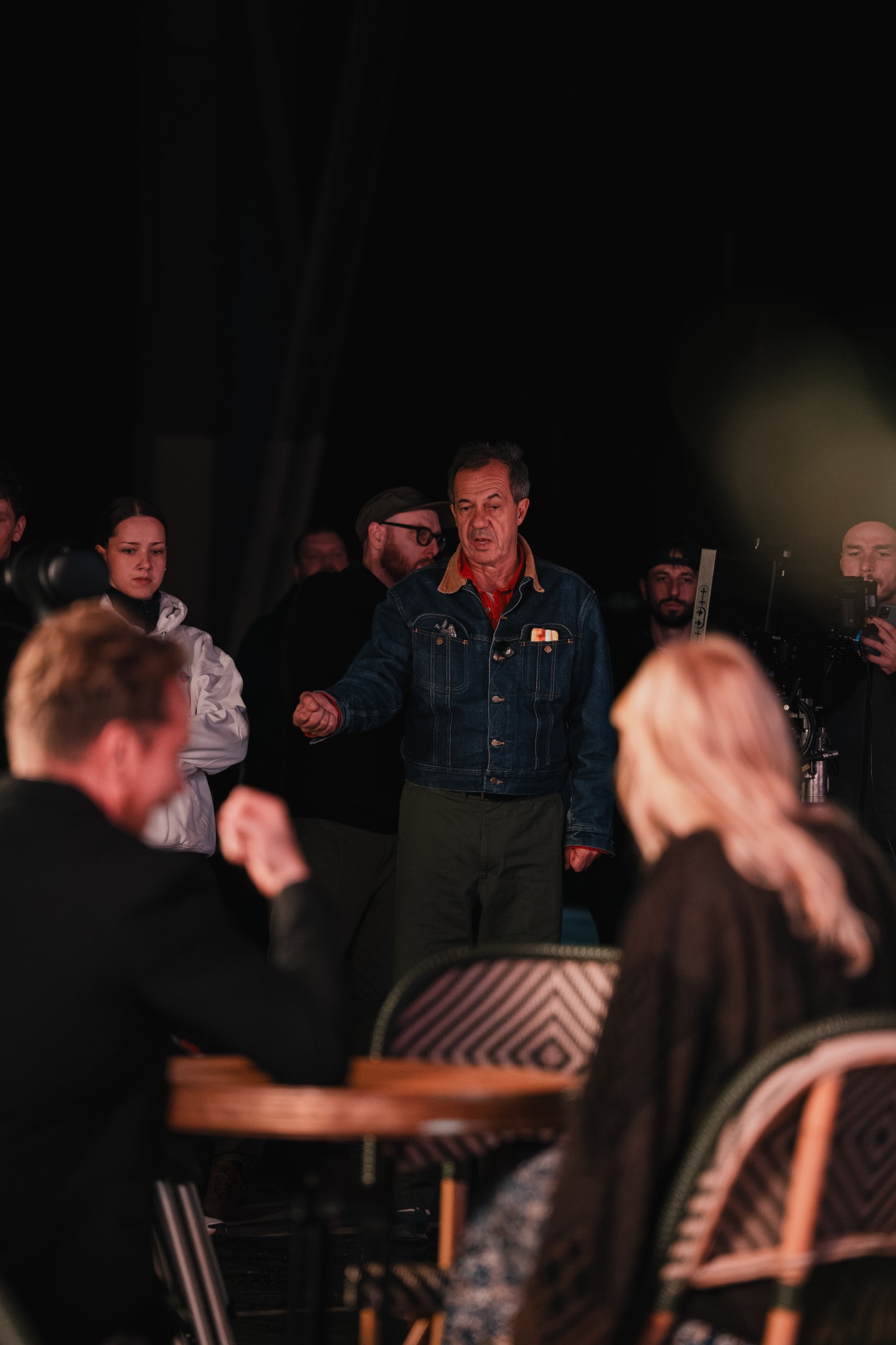
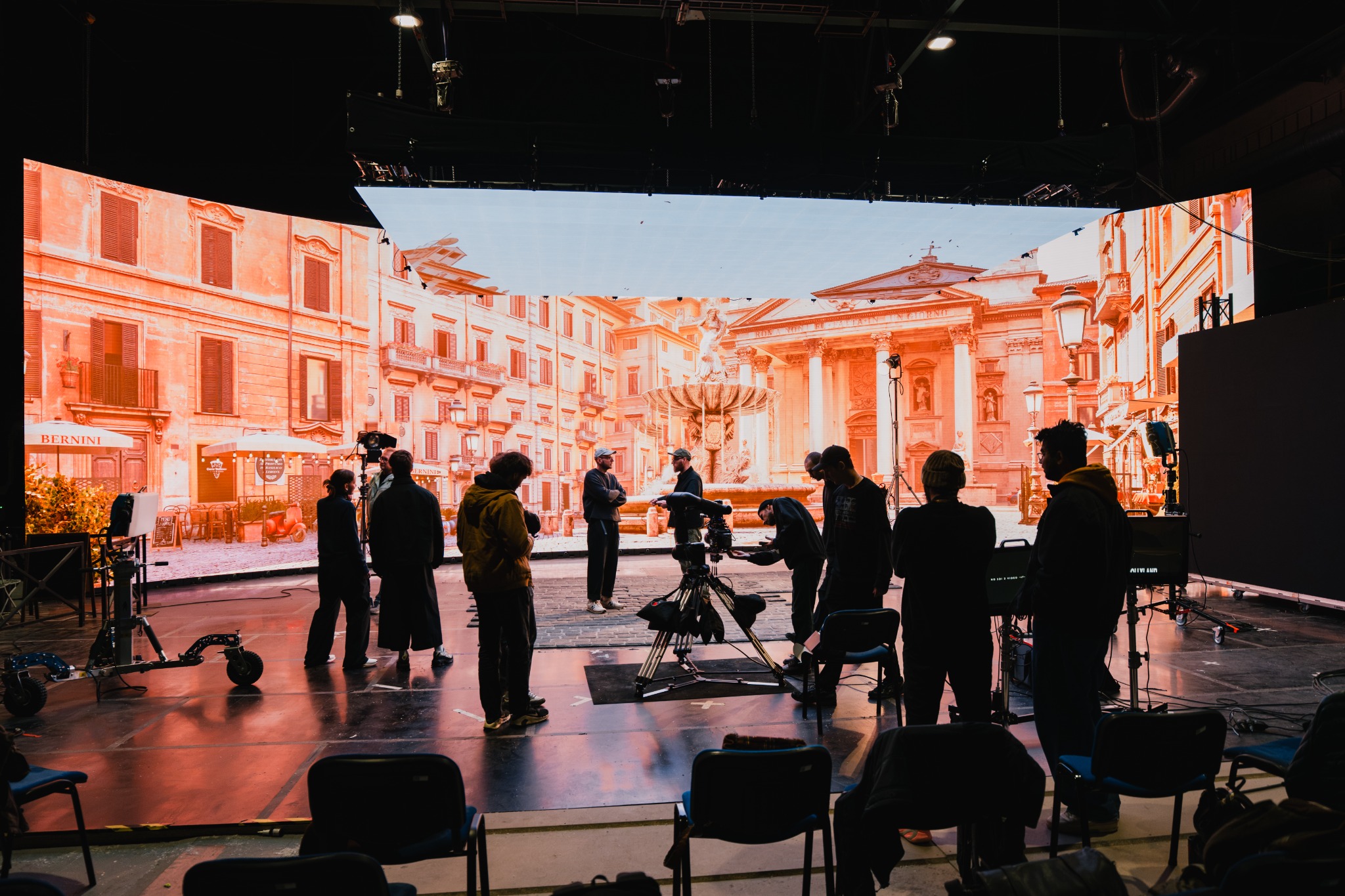
On stage, a virtual city square provided the setting for a practical filming exercise. Physical tables and chairs extended the screen environment into the foreground, giving the performers a space to inhabit. Participants worked around the camera, rehearsed the scene and examined the image on the production monitors, bringing the relationship between the physical set and digital background into view.

The group preparing a scene against a virtual city square

Nick’s work with the group kept the emphasis on the scene and the people within it. The day offered an opportunity to connect preparation with decisions made during filming: how to position a performer, choose a camera angle and communicate a change across the crew. It was another step towards using virtual production as a practical tool for telling a story.

Nick Jones working with performers on the physical cafe set
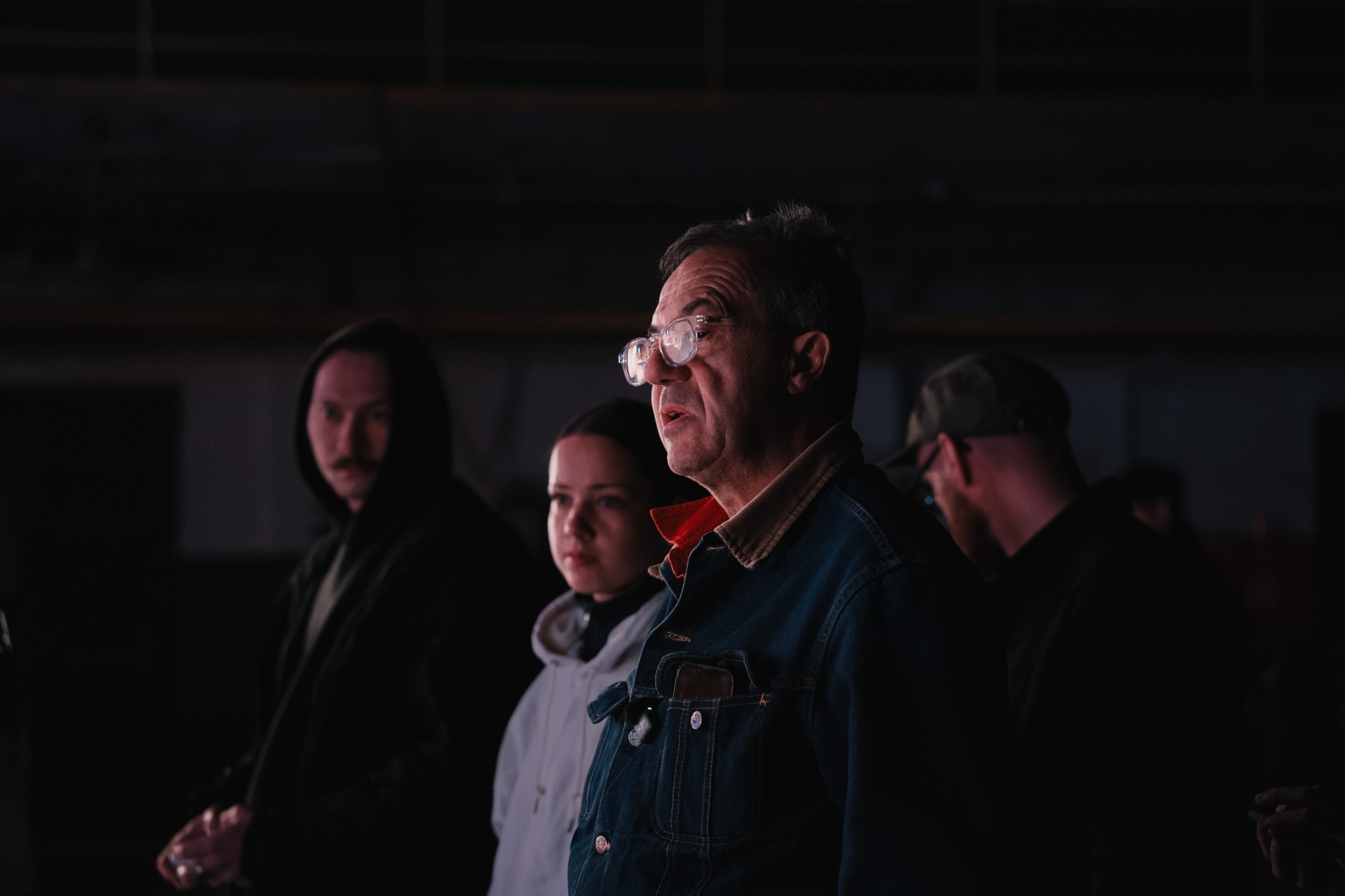
Nick Jones discussing the scene with bootcamp participants

Participants reviewing the cafe scene on a production monitor

Bootcamp No.3, Day Three: Vojta Horký and a Collaborative Shakespeare Shoot, 28 Oct 2026


Day Three of Digitalent Academy’s third bootcamp connected the theory of virtual production with a shared filming exercise. The programme moved from a morning lecture to an afternoon on set, where the group worked on a Shakespeare project and tested ideas in front of the camera.

From 09:00 to 13:00, Vojta Horký led the theoretical part of the day. The session explored where virtual production can be useful, where its limitations lie, and why preparation matters before stepping onto the stage. It provided a framework for considering when this approach serves a film and what needs to be prepared before shooting.

Morning lecture on virtual production during Digitalent Academy Bootcamp No.3.

The afternoon was dedicated to practical on-set filming with Jaroslav Malý from the Film Academy of Miroslav Ondříček in Písek (FAMO). All Digitalent Academy students and participants took part in real filming and virtual production tests based on a Shakespeare project.

Afternoon introduction to the collaborative Shakespeare filming project.
Presentation during the practical session of Digitalent Academy Bootcamp No.3.

The practical session offered a chance to explore the relationship between performance, camera, lighting and the digital environment as part of a shared production process. Working together on set brought the morning’s questions into a concrete filmmaking situation.

A performer in front of the camera during the virtual production shoot.
Reviewing the filmed performance on a production monitor.

The day combined reflection, experimentation and collaboration, approaching virtual production and real shooting of Jaroslav Malý  through both its technical demands and its possibilities for storytelling.

Behind the scenes of the shared virtual production filming session.

Bootcamp No.3, Day Two: Mazze and ASSIMILATE at Jordan Studio, Prague, 27 Oct 2026


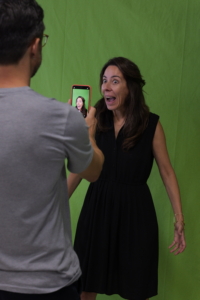
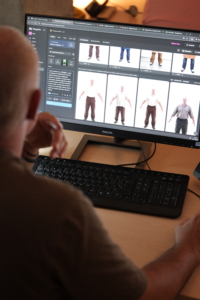
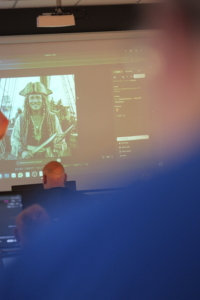
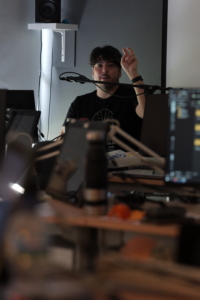
The second day of Digitalent Academy’s third bootcamp continued at Jordan Studio in Prague with Mazze and ASSIMILATE tools. Following the opening day’s introduction to virtual production principles and camera testing, the programme offered further insight into the technologies and workflows used in studio practice.


Participants attending the ASSIMILATE session at Jordan Studio in Prague.

In virtual production, the final image depends on several interconnected elements: the camera, the physical set, the digital environment, and the tools used to process and monitor the image. Each affects the others. Understanding these connections helps filmmakers determine what needs to be prepared before filming, what can be adjusted on set, and how to check whether a change has achieved the intended result.


Mazze presenting to Digitalent Academy participants at Jordan Studio.
Mazze explaining the virtual production setup beside the LED wall.
The session with Mazze and ASSIMILATE placed these topics in the context of another studio environment. For participants, the second day was an opportunity to deepen their technical understanding and connect it with filmmaking decisions: how to prepare a shot, assess the image, and agree on the adjustments needed.


Participants examining the LED stage and virtual production test patterns.
Mazze and participants reviewing the image at the studio monitors.

The bootcamp thus progressed from fundamental principles to their application in a working studio, with an emphasis on preparation, collaboration, and image monitoring.

Bootcamp No.3, Day One: Virtual Production Fundamentals with Felix Brandstetter at Studio Pokrok, 26 Oct 2026


The third Digitalent Academy bootcamp opened with Felix Brandstetter at Studio Pokrok. The first day focused on the fundamentals of virtual production, camera work, and how to identify an image problem and describe it clearly to the studio’s technical team.


Virtual production brings together real performers, props, and physical sets with digital environments that can be adjusted in real time. This allows filmmakers to see how these elements work together during the shoot itself. A convincing result requires consistency in perspective, lighting, colour, and camera movement, supported by careful preparation before filming begins.

One of the day’s main topics was building a repeatable camera test. The principle is to document the initial setup, change one parameter at a time, and compare results under the same conditions. This makes it easier to identify what is causing a problem and which adjustment actually helps.

Communication is equally important. Saying that an image “doesn’t look right” is not enough. The team needs to know where the problem appears, when it occurs, and how it relates to camera movement or changes in settings. The first day established a shared foundation for the sessions ahead: observe carefully, test systematically, and work across departments to find solutions together.

BOOTCAMP NO.2: DAYS 6 & 7 IN MALLORCA – OCTOBER 3–4, 2026 – CREATE DIGITAL WORLDS


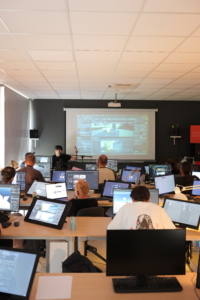
On October 3 and 4, CREATE DIGITAL WORLDS – Bootcamp N.2 reached its final stage at CEF Escuela de Artes Audiovisuales in Palma, Mallorca, bringing together the week’s work in real-time look development, Virtual Production, AI filmmaking and final project presentations.

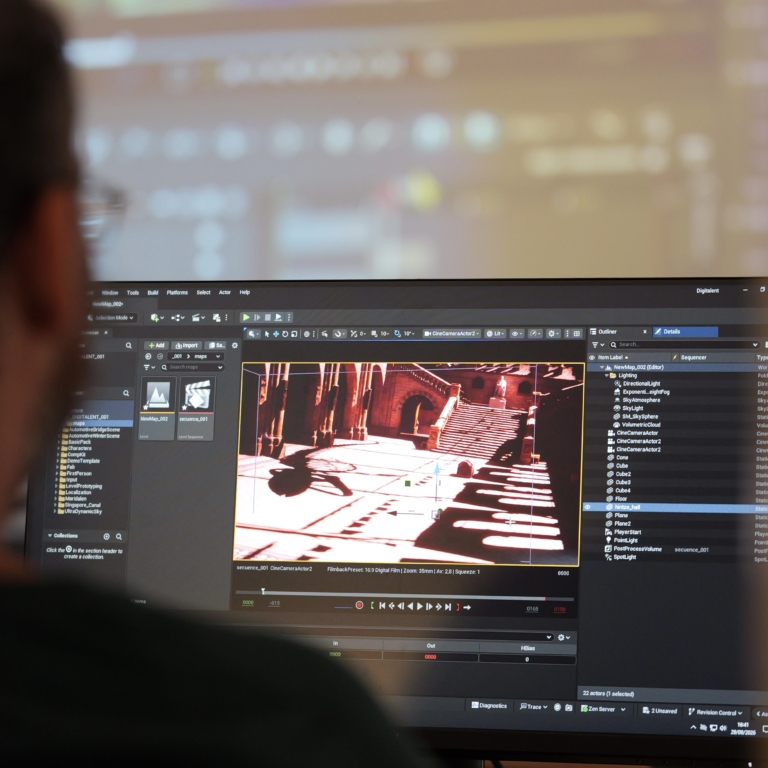
On October 3, Day 6 focused on Real-Time Look Development and Virtual Production workflows. Ramón Olivero led participants through further hands-on work with Unreal Engine and real-time production, building on the skills and techniques developed throughout the week.

After the sessions, participants continued the evening together over drinks, creating an opportunity to network, exchange ideas and connect with fellow participants and tutors in a more informal setting.

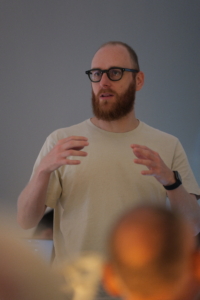
On October 4, the final day of the bootcamp brought together the different themes explored throughout the week. Federico Luglio, founder of AIMA Productions and the AI Movie Awards, joined the programme for a masterclass on The Future of AI Movies, exploring how generative AI is already changing audiovisual production and how these tools can be integrated into real production workflows. His session also introduced participants to the AI Movie Awards and the growing international community around AI filmmaking.

The final day also gave participants the opportunity to present and screen the projects they had developed throughout the bootcamp, showcasing the different approaches, tools and workflows explored during the week — from Generative AI and Unreal Engine to hybrid Virtual Production and real-time production.

The bootcamp concluded with a certificate ceremony, celebrating the participants’ completion of CREATE DIGITAL WORLDS – Bootcamp N.2 and the work they created during the intensive seven-day programme.

After a week of learning, experimentation, hands-on production and collaboration, CREATE DIGITAL WORLDS – Bootcamp N.2 came to a close in Mallorca — with new skills, new projects and new connections to take forward.

BOOTCAMP No.2: DAYS 4 & 5 IN MALLORCA – OCTOBER 1–2, 2026

On October 1 and 2, CREATE DIGITAL WORLDS – Bootcamp N.2 continued at CEF Escuela de Artes Audiovisuales in Palma, Mallorca, bringing together AI-assisted workflows, hybrid production, Green Production and Unreal Engine.

On October 1, Day 4 focused on 3D assets, datasets and hybrid production workflows. Ake Mora continued exploring AI-assisted approaches, while Oscar Olarte introduced participants to datasets and AI training in hybrid production, looking at 2D, 2.5D, agent-based 3D scenes, Gaussian Splatting and 4D workflows. In the afternoon, Josep Antoni Ribas Rosselló brought the work into the studio, connecting the digital assets with the LED wall and green-screen setup.


On October 2, Day 5 shifted the focus towards Green Production and Unreal Engine. Paloma Urrutia explored sustainability in Virtual Production, followed by Ramón Olivero, who took participants deeper into Unreal Engine and its integration into real-time production workflows.

Across these two days, participants continued connecting AI, datasets, digital assets and real-time production with practical Virtual Production workflows, while also exploring how sustainability can be integrated into the production process.

BOOTCAMP No.2: DAYS 2 & 3 IN MALLORCA – SEPTEMBER 29–30, 2026

On September 29 and 30, CREATE DIGITAL WORLDS – Bootcamp N.2 continued at CEF Escuela de Artes Audiovisuales in Palma, Mallorca, taking participants deeper into Generative AI, Unreal Engine and AI-assisted Virtual Production workflows.

 On September 29, Ake Mora led the morning session on Generative AI for Virtual Production, exploring AI-generated references, concept development and lookdev, and how creative ideas can be developed into practical Virtual Production content.

 In the afternoon, Jan Adamus continued with Unreal Engine production and cinematic workflows, working with materials, environments, cameras, animation and Sequencer as participants developed their scenes further.

September 30 focused on AI-assisted environment creation and hands-on studio work. Ake Mora explored AI-assisted environments, Gaussian Splatting and WorldLabs, joined by Odet Abadia Gomez for a bonus masterclass.

 In the afternoon, Josep Antoni Ribas Rosselló brought the participants’ digital environments into the LED wall and green-screen studio, allowing them to test and refine their work in a real Virtual Production setup.


Across these two days, participants continued connecting AI-generated ideas and digital environments with real-time production workflows, moving from experimentation and development into practical studio testing.