BOOTCAMP NO.2: DAYS 6 & 7 IN MALLORCA – OCTOBER 3–4, 2026 – CREATE DIGITAL WORLDS


On October 3 and 4, CREATE DIGITAL WORLDS – Bootcamp N.2 reached its final stage at CEF Escuela de Artes Audiovisuales in Palma, Mallorca, bringing together the week’s work in real-time look development, Virtual Production, AI filmmaking and final project presentations.

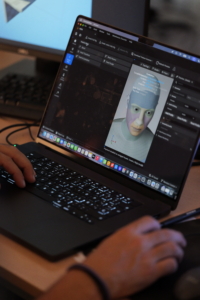
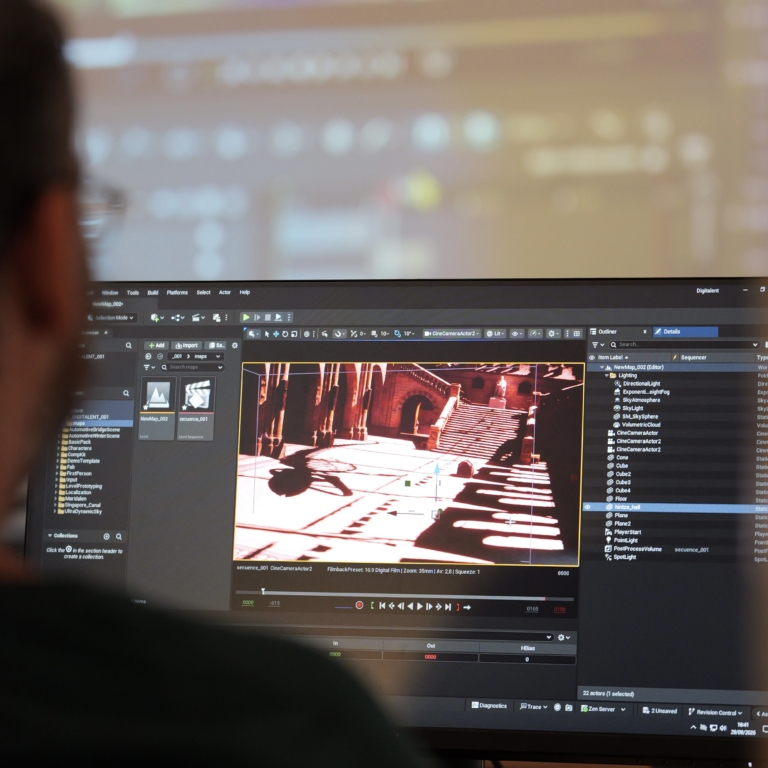
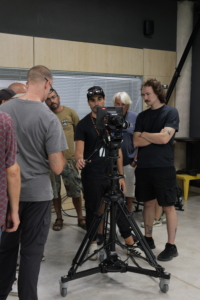
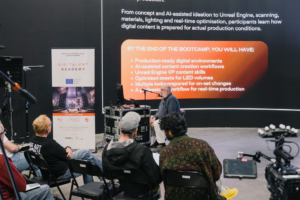
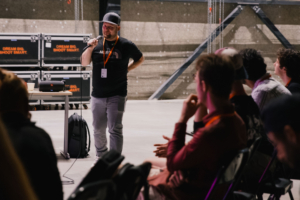
On October 3, Day 6 focused on Real-Time Look Development and Virtual Production workflows. Ramón Olivero led participants through further hands-on work with Unreal Engine and real-time production, building on the skills and techniques developed throughout the week.

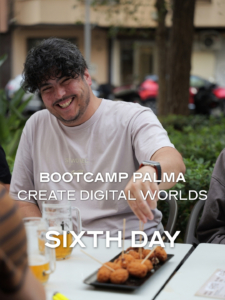
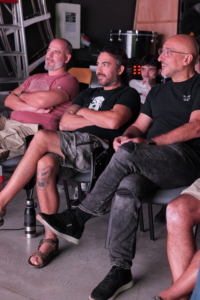
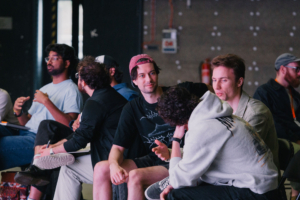
After the sessions, participants continued the evening together over drinks, creating an opportunity to network, exchange ideas and connect with fellow participants and tutors in a more informal setting.

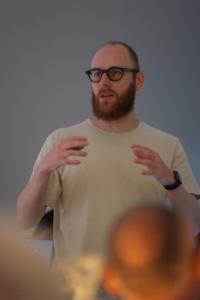
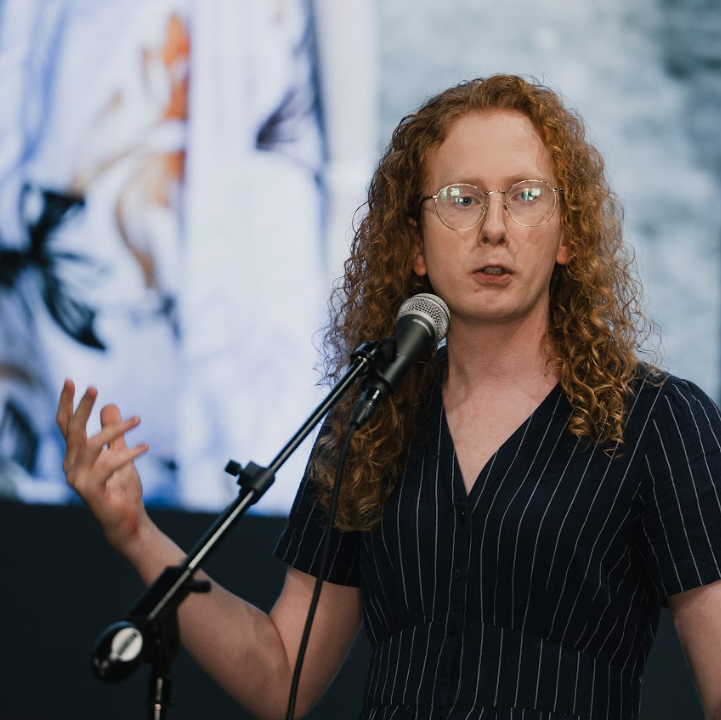
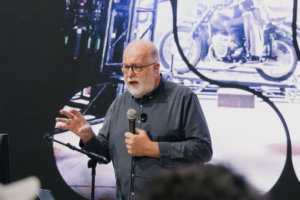
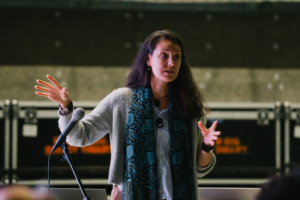
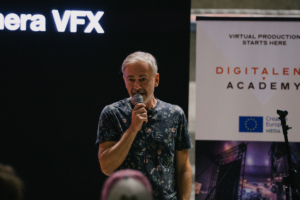
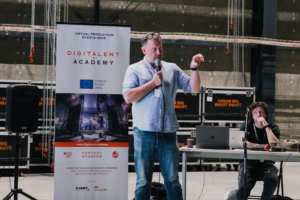
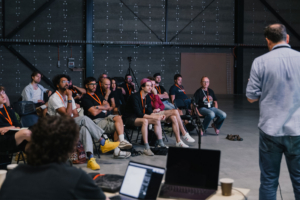
On October 4, the final day of the bootcamp brought together the different themes explored throughout the week. Federico Luglio, founder of AIMA Productions and the AI Movie Awards, joined the programme for a masterclass on The Future of AI Movies, exploring how generative AI is already changing audiovisual production and how these tools can be integrated into real production workflows. His session also introduced participants to the AI Movie Awards and the growing international community around AI filmmaking.

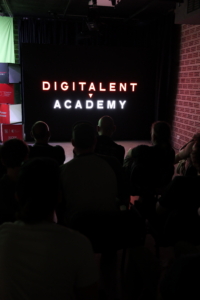
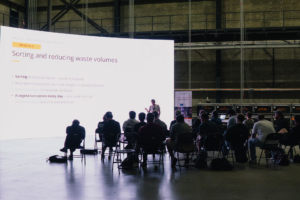
The final day also gave participants the opportunity to present and screen the projects they had developed throughout the bootcamp, showcasing the different approaches, tools and workflows explored during the week — from Generative AI and Unreal Engine to hybrid Virtual Production and real-time production.

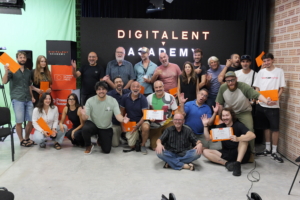
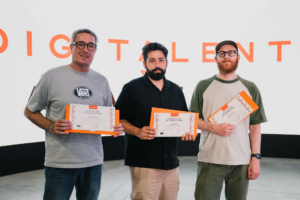
The bootcamp concluded with a certificate ceremony, celebrating the participants’ completion of CREATE DIGITAL WORLDS – Bootcamp N.2 and the work they created during the intensive seven-day programme.

After a week of learning, experimentation, hands-on production and collaboration, CREATE DIGITAL WORLDS – Bootcamp N.2 came to a close in Mallorca — with new skills, new projects and new connections to take forward.

BOOTCAMP No.2: DAYS 2 & 3 IN MALLORCA – SEPTEMBER 29–30, 2026

On September 29 and 30, CREATE DIGITAL WORLDS – Bootcamp N.2 continued at CEF Escuela de Artes Audiovisuales in Palma, Mallorca, taking participants deeper into Generative AI, Unreal Engine and AI-assisted Virtual Production workflows.

 On September 29, Ake Mora led the morning session on Generative AI for Virtual Production, exploring AI-generated references, concept development and lookdev, and how creative ideas can be developed into practical Virtual Production content.

 In the afternoon, Jan Adamus continued with Unreal Engine production and cinematic workflows, working with materials, environments, cameras, animation and Sequencer as participants developed their scenes further.

September 30 focused on AI-assisted environment creation and hands-on studio work. Ake Mora explored AI-assisted environments, Gaussian Splatting and WorldLabs, joined by Odet Abadia Gomez for a bonus masterclass.

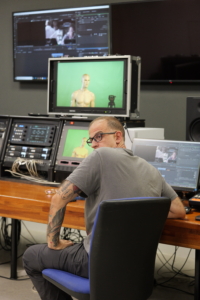
 In the afternoon, Josep Antoni Ribas Rosselló brought the participants’ digital environments into the LED wall and green-screen studio, allowing them to test and refine their work in a real Virtual Production setup.


Across these two days, participants continued connecting AI-generated ideas and digital environments with real-time production workflows, moving from experimentation and development into practical studio testing.

BOOTCAMP No.1: From Virtual Worlds to the Final Shot

Day 7 of the DIGITALENT Academy Bootcamp brought the entire week together in one exciting challenge: creating original film sequences on a virtual production stage.

Led by Lukáš Fišárek and Lukáš Skalník, the final workshop placed the technology directly in the hands of the participants. Working as small production teams, they developed their own visual concepts, prepared backgrounds in Unreal Engine or selected pre-recorded video content, and combined them with live performances, camera movement, lighting and practical elements on the set.


A major highlight was the programmable robotic camera arm. Participants learned how to mount and configure the camera, prepare the system and programme precise, repeatable movements. They could then immediately see how the movement of the physical camera interacted with the content displayed on the LED wall. The exercise demonstrated how careful coordination between the camera, lighting, performance and virtual environment can transform a technical setup into a convincing cinematic shot.


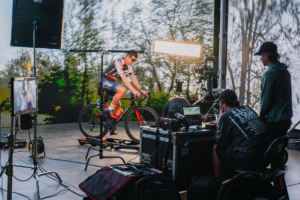
One of the central practical scenes featured a professional cyclist riding in front of a specially prepared moving woodland background. With the robotic arm capturing dynamic camera movements, the participants experimented with angles, lighting and timing to create the impression of a real journey through the landscape—all without leaving the studio.


Every participant also had the opportunity to work with their own content and creative ideas. Among the most visually distinctive examples was a scene by Slovak participant Lukáš Teren, who placed his performance inside a dramatic volcanic environment surrounded by lava. Polish participant Michal Sadowski chose a completely different direction, combining the robotic camera movement with a colourful, psychedelic background reminiscent of 2001: A Space Odyssey. These were just two examples of the many individual concepts that demonstrated how differently the same virtual production tools can be used.

Throughout the workshop, participants took on different production roles, programmed camera moves, adjusted lighting, worked with performers and props, and observed how every creative and technical decision affected the final image in real time.


After lunch, the seven-day programme concluded with a certificate ceremony. Each participant received a Certificate of Completion, marking not only the successful completion of the intensive course but also a week of collaboration, experimentation and shared learning.

By the end of Day 7, participants had moved far beyond simply observing virtual production technology. They had used it to build, direct and shoot their own scenes—turning virtual worlds into real cinematic images and bringing the first DIGITALENT Academy Bootcamp to a memorable close.

BOOTCAMP No.1: Inside the LED Stage: Technology, VFX and AI in Real-Time Filmmaking

Day 6 of the DIGITALENT Academy Bootcamp offered a detailed journey inside the LED stage-examining not only what virtual production can achieve, but also how its individual technical and creative components must work together to produce a convincing final image.


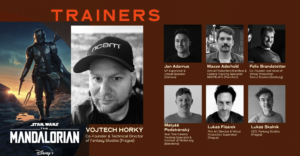
The day began with a 45-minute presentation by Pedro Barbadillo, who introduced the second DIGITALENT bootcamp, Create Digital Worlds, which will take place in Palma de Mallorca. Pedro presented its educational concept, complete programme and individual training modules, while also introducing the trainers and international guest speakers who will lead the sessions. Participants received a detailed overview of how the Mallorca bootcamp will focus on designing, building and optimising digital environments for virtual production, Unreal Engine and emerging AI-assisted creative workflows.


The main morning programme was then led by Lukáš Skalník, Lukáš Fišárek and Michal Svoboda, bringing together technological expertise, visual storytelling and practical filmmaking experience.

Rather than approaching the LED wall simply as a large display, the trainers examined it as a complex production system. Michal Svoboda showed participants an actual LED module and explained its physical construction: the individual panels, pixels, data connections, power distribution, processing units and structural elements from which a complete LED wall is assembled. This made it possible to understand what is normally hidden behind the final image-including the extensive technical infrastructure visible from the back of the stage.


A key part of the workshop focused on synchronisation. For an LED stage to function correctly, the LED processor, refresh rate, camera frame rate, shutter, tracking data and image-rendering system must operate within the same precisely coordinated timing structure. Even a small mismatch can produce flickering, scan lines, tearing, colour inconsistencies or visible delays between the physical camera movement and the virtual environment. Participants learned why technologies such as genlock are essential for keeping the camera, LED wall and real-time content in step with one another.

The workshop also explored the role of the Director of Photography (DoP) and the creative decisions that must be made when shooting against an LED wall. Camera position, lens choice, focal length, depth of field, exposure, framing, movement and lighting all influence whether the physical and digital parts of the scene appear to belong to the same world. The LED stage does not simply provide a background: it becomes an active source of light, colour and reflections that directly affects actors, costumes, props and vehicles.

An important part of the discussion compared LED-based virtual production with more traditional VFX and green-screen workflows. The trainers demonstrated how an LED stage can provide filmmakers with a result that is already much closer to the final image during shooting. Directors and cinematographers can immediately see the relationship between actors, camera movement, lighting and the digital environment, while performers can react to a visible world instead of imagining one against a green background.

At the same time, the workshop made clear that LED stages are not an automatic replacement for VFX. They require extensive preparation, calibrated colour management, precise synchronisation and close collaboration between departments. Resolution, pixel pitch, moiré, viewing angles, stage dimensions and the distance between the camera and the wall all impose practical limitations. Virtual production therefore works best as a carefully designed hybrid process in which in-camera effects, real-time environments and traditional post-production complement one another.

The trainers also discussed the growing role of artificial intelligence within this workflow. AI can support early visual research, concept development, rapid environment variations, previsualisation and selected stages of asset creation. It can accelerate experimentation and help filmmakers explore multiple visual directions before committing resources to a final virtual environment. However, the session emphasised that these tools still depend on strong artistic direction and technical supervision: speed alone does not create a coherent cinematic world.


From 14:00 to 17:00, the programme continued with Emma Theis Berthelsen, an independent Virtual Production Supervisor with more than ten years of experience in immersive storytelling, film technologies and real-time production.

Emma’s expertise spans ICVFX, LED stages, Unreal Engine, AR/VR and 360° video. She founded Trida Media, worked as a virtual reality consultant and currently serves as Chief Technology Officer at Norse Theme Parks. Her international professional experience includes collaborations with Amazon Studios, NBCUniversal and Netflix.

Using concrete production layouts and virtual set simulations, Emma demonstrated how a project moves from an initial creative idea to a spatially and technically workable virtual production setup. Her examples showed how the digital environment, physical set, LED wall, performers and camera positions must be designed as parts of a single system. She also addressed the importance of communication between creative and technical departments, particularly when decisions made in a virtual environment have immediate consequences for the physical shoot.

The sixth day revealed the LED stage from the inside out—from the construction of an individual panel and the precision of synchronisation to cinematography, VFX strategy, film simulation and AI-assisted design. It demonstrated that successful virtual production is not defined by one technology alone. It emerges from the collaboration of filmmakers, artists and engineers who understand both the creative possibilities of the image and the complex system that makes it possible.


BOOTCAMP No.1: Tracking the Invisible: From Camera Movement to Movie Magic

Day 5 of the DIGITALENT Academy Bootcamp explored different approaches to camera tracking and their role in virtual production.

Michal Svoboda presenting the Vicon optical tracking system
Vicon optical tracking demonstration at the DIGITALENT Academy Bootcamp

The morning began with Michal Svoboda, who presented the Vicon optical tracking system and explained how external cameras capture and calculate movement within a defined production space.

He was followed by Matyáš Podstranský, founder of MotionJoy, who introduced ZEISS CinCraft Scenario—an inside-out camera tracking solution that uses cameras and visual reference points to determine the position and movement of the production camera.

Matyáš Podstranský presenting ZEISS CinCraft Scenario
Participants assembling and testing the camera tracking system

After lunch, Matyáš continued with an intensive hands-on training session. Participants assembled the complete tracking system, mounted its components onto the camera, calibrated the setup and tested it in practice. This allowed them to understand not only how the technology works, but also how it must be prepared, operated and troubleshot during a real production.

Josep Antoni Ribas Rosselló presenting his VFX experience
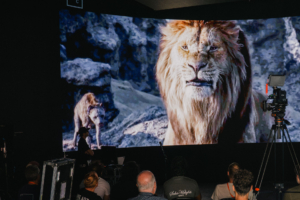
VFX case study from The Lion King

The final session was led by Josep Antoni Ribas Rosselló, who shared his extensive experience in VFX and compositing. Having contributed to major international productions including Pirates of the Caribbean and The Lion King, he presented practical examples and demonstrated how complex scenes are created by combining filmed material, computer-generated elements and visual effects.

The day concluded with a friendly evening gathering for participants, trainers and project partners at POLIS restaurant in Palác Akropolis, offering an opportunity to continue conversations and strengthen the international DIGITALENT community in an informal atmosphere.

BOOTCAMP No.1: ASSIMILATE Theory for VP and Virtual Drive by Car

Day 4 of the DIGITALENT Academy Bootcamp was dedicated to ASSIMILATE, with the full-day programme led by Romain Donnot.

The morning session introduced participants to the essential principles, tools and workflows of ASSIMILATE within virtual production.


Romain explained how the system connects digital content, cameras and the LED stage, preparing participants for the practical work that followed.

In the afternoon, theory turned into an exciting hands-on experience. Participants worked together on a practical shoot featuring a car and driver travelling through the streets of Menorca, Spain, recreated on the LED stage.


Everyone had the opportunity to test the workflow directly and explore how the virtual environment interacts with the physical set, camera and lighting. Particular attention was given to reflections on the car, which helped integrate the vehicle and driver convincingly into the digital surroundings.

The exercise demonstrated how virtual production can transform a studio into a completely different location, and how technical precision, lighting and visual creativity must work together to make the illusion believable.

BOOTCAMP No.1: From Unreal Engine to the LED Stage

Day 3 of the DIGITALENT Academy Bootcamp in Prague was dedicated entirely to Unreal Engine and Real-Time Production, with the full-day programme led by Jan Adamus, VP Supervisor and Unreal Engine Generalist.


Jan introduced participants to the essential logic of real-time production: how 3D scenes are structured, how digital assets and environments are created and modified, and how lighting, rendering performance, camera movement and the LED stage must work together as a single production system.

The central part of the day was intensely hands-on. Participants did not simply observe the technology—they worked with it directly. Everyone had the opportunity to manipulate elements inside a real-time 3D environment, modify assets, adjust lighting and prepare camera-ready content for the LED stage.
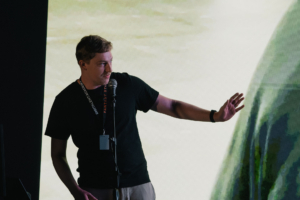
Working together, participants tested how changes made in Unreal Engine immediately influenced the environment displayed on the LED wall. They also explored the importance of perspective and parallax, discovering how a digital world responds to the physical camera and becomes an active part of the film set.


Jan Adamus has been working at the intersection of art and technology for more than a decade. As a visual and technical artist, Unreal Engine specialist and creator of Just Assets, he develops digital environments, tools and workflows for virtual production, immersive installations and real-time visual experiences.

By the end of the day, virtual production was no longer an abstract technological concept. It had become something participants could operate, adjust, test and understand through direct experience. The LED wall was no longer simply a screen—it became a living extension of the film set.

BOOTCAMP No.1: Sustainability and Virtual Production: Building the Green Film Sets of the Future

Day 2 of the DIGITALENT Academy Bootcamp in Prague explored three interconnected dimensions of contemporary audiovisual production: environmental sustainability, safe and healthy working environments, and the rapidly evolving possibilities of virtual production.

The morning session, led by Miroslav Vlček, focused on Green Shooting and environmentally responsible production practices. Participants explored practical measures to reduce the environmental impact of film and content production—from energy consumption and transportation to accommodation, catering, materials and waste management. The session also introduced green filming standards and carbon footprint calculation methodologies, demonstrating how production teams can measure their environmental impact, identify the most significant sources of emissions and make informed, lower-impact decisions from the earliest planning stages through to production.

Film consultant Jana Neustupová then led a session on Health & Safety, Mental Health & Wellbeing. Participants discussed how to create safer, healthier and more respectful working environments on film sets, while also exploring the role and fundamental principles of intimacy coordination.

The day concluded with a presentation by virtual production supervisor Jiří Forejt, who shared his practical experience from the Virtual Production of Jiří Havelka’s film Emergency Situation. The presentation developed into an intensive discussion, with participants asking numerous questions about production workflows, technical challenges, creative possibilities and Jiří Forejt’s experience of implementing virtual production in practice.

The three sessions demonstrated that the future of filmmaking will not be shaped by technology alone. Environmental responsibility, mental wellbeing, workplace safety and the thoughtful use of emerging production tools are increasingly interconnected—and together represent essential professional competencies for the next generation of filmmakers and content creators.

BOOTCAMP No.1: DIGITALENT Academy Welcomes Its First Bootcamp Participants – 17/8/2026

Today, the first DIGITALENT ACADEMY bootcamp officially kicked off at Fantasy Studios in Prague.


Operate the LED Stage brings together 20 participants from eight European countries for an intensive week combining a solid theoretical foundation in Virtual Production with hands-on experience using a professional LED stage.


The opening session was led by Vojta Jeff Horký, one of Europe’s leading Virtual Production experts. He introduced the key technologies and principles behind Virtual Production, laying the groundwork for the practical sessions ahead.

Cinematographer Martin Štěpánek followed with a real-world case study of Mimořádná událost, a feature film set aboard a train and shot largely using Virtual Production techniques.


Over the coming days, participants will explore essential parts of the Virtual Production workflow – including camera tracking, synchronisation, content playback and the operation of an LED stage – under the guidance of experienced industry professionals.

Preparations Are in Full Swing for Bootcamp No. 1

Preparations for DIGITALENT Academy Bootcamp No. 1 – Operate the LED Stage are entering their final stage. From 17–23 August 2026, participants from across Europe will meet in Prague for an intensive week of hands-on Virtual Production training led by an outstanding international team of industry experts. 

Beyond the technical programme, Bootcamp No. 1 has been designed as a complete immersion into the Czech film industry.

Participants will enjoy exclusive networking opportunities with Czech film directors, cinematographers and Virtual Production specialists, gaining first-hand insight into one of Europe’s fastest-growing production hubs.

A highlight of the programme will be a guided visit to Barrandov Studios—the largest film studio complex in the Czech Republic and one of the oldest and most important film studios in Europe. Participants will explore the facilities where numerous international productions have been filmed and gain a behind-the-scenes understanding of professional film production.

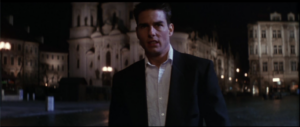
The cultural programme will also include a unique cinematic walking tour through the historic centre of Prague. Rather than a traditional sightseeing tour, participants will visit iconic filming locations featured in internationally acclaimed productions, including Mission: Impossible, Casino Royale, Spider-Man: Far From Home, The Bourne Identity, Hellboy, Amadeus, Jojo Rabbit, and many others that have transformed Prague into one of Europe’s most sought-after filming destinations.

The tour is planned to be accompanied by renowned Czech location manager Pavel Mrkous, whose remarkable career spans decades of major international productions shot in Prague. Having collaborated on numerous Hollywood blockbusters, he will share behind-the-scenes stories, explain how Prague is transformed into cities around the world, and offer participants a rare insider’s perspective on international filmmaking.

Throughout the week, participants will not only develop practical skills in Virtual Production, AI-assisted workflows and LED stage production, but will also build valuable international connections and gain a deeper understanding of how large-scale film productions are created.


At DIGITALENT Academy, we believe that mastering Virtual Production means understanding the entire filmmaking ecosystem—from cutting-edge technology to the people, locations and creative processes behind every successful production.