




TRAINERS
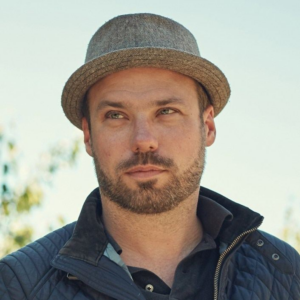
Fabian Wagner ASC BSC
Trainer, Shoot Inside the Volume
Cinematographer · ASC BSC
Fabian Wagner ASC BSC is the cinematographer behind episodes of Game of Thrones, Sherlock and The Crown, as well as the feature film Justice League. His work on Game of Thrones’ “Battle of the Bastards” earned an American Society of Cinematographers Award. He received Emmy nominations for Sherlock and Game of Thrones. Alongside his screen work, he supports emerging filmmakers through mentoring and masterclasses.
At Shoot Inside the Volume, Fabian leads Friday 30 October 2026, bringing cinematographic craft to a practical LED-stage workshop. The day focuses on visual storytelling, lighting, lens choice and camera movement, with recorded tests and a shared review. Designed primarily for cinematographers, DOPs and camera operators, it also gives directors and producers insight into the collaboration behind a strong image.
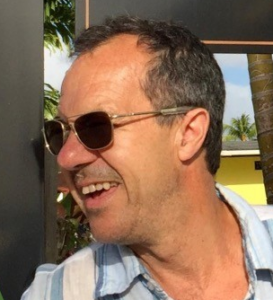
Nick Jones
Trainer, Shoot Inside the Volume
Director and Virtual Production Consultant
Nick Jones is a director and creative working across commercials, television, branded content and immersive experiences. His career includes work as Creative Director of Secret Cinema and directing for brands such as Mercedes, Sony and IKEA. He has worked in virtual production since 2020, combining performance direction with practical experience of previs, digital environments and production workflows.
At Shoot Inside the Volume, Nick leads Thursday 29 October 2026. His workshop follows a scene from script and blocking to performance, camera coverage and review. Participants practise collaboration between director, DOP and VP team, including how to respond when a creative change affects the shoot. The day is particularly relevant to directors and producers alongside the camera department.

Spencer Chase
Trainer, Shoot Inside the Volume
Virtual Production Supervisor
Spencer Chase is a virtual production supervisor whose work connects real-time imagery with the practical demands of filming. His credits include Engine Technical Director on the Apple TV series Hijack with Lux Machina. In 2026, ScreenSkills featured Spencer as VP supervisor alongside cinematographer Ed Moore BSC in a session exploring virtual production on Hijack season two.
At Shoot Inside the Volume, Spencer leads Saturday 31 October 2026. His workshop puts participants through a supervised production exercise: preparing the stage, agreeing shot priorities, handling a controlled change and delivering usable footage with the right production information. Camera teams, directors and producers practise making decisions together while keeping the shoot moving.
Michal Svoboda
Trainer, Shoot Inside the Volume
Technical Director, Fantasy Studios
Michal Svoboda is Technical Director at Fantasy Studios. His background spans software engineering, live events, motion capture and film, which he brings to the development of virtual production workflows.
At Shoot Inside the Volume, Michal leads the practical afternoon on Monday 26 October 2026. Participants record reference images, recognise visible artefacts and learn to communicate image problems clearly to the stage team. Working with the studio’s LED wall, genlock-capable camera and Vicon tracking, they establish a repeatable baseline before the week’s more demanding shooting exercises.

Jan Adamus
Trainer, Operate the LED Stage, Create Digital Worlds
VP Supervisor & Unreal Operator, Fantasy Studios
Jan Adamus is a VP Supervisor and Unreal Operator at Fantasy Studios, specialising in virtual production and real‑time environments built in Unreal Engine. For more than a decade he has been working at the intersection of art and technology – creating immersive digital worlds, projection‑mapping shows, interactive installations and tools that power real‑time and virtual production workflows. He is the creator of Just Assets, where he develops assets, tools and tutorials for Unreal Engine, and as an Unreal Engine Authorized Instructor he helps creators around the world speed up their workflow and gain real confidence in real‑time production.
His portfolio includes work for both Czech and international clients, including the Anthony Joshua x Under Armour virtual production campaign and collaborations with studios and artists across Europe. In the Operate the LED Stage bootcamp, Jan will guide participants from “what exactly is Unreal doing on this LED wall?” to building camera‑ready scenes: how to design environments for the lens, think about light, parallax and performance in real time, and collaborate with directors, DOPs and the VP team so that the LED stage becomes an active storytelling tool rather than just a pretty background.
Jan will also be a key trainer on the Create Digital Worlds bootcamp in Mallorca, where he will go deeper into building and optimising Unreal worlds themselves – from first layout through to final, production‑ready environments designed for virtual production and real‑time visuals. For participants of both bootcamps, this is a chance to learn directly from one of the most experienced real‑time environment creators working with Unreal Engine in our region, someone who uses the tool every day and actively shapes how others work with it.

Vojtěch “Vojta” Horký
Trainer, Operate the LED Stage, Shoot Inside the Volume
Co-Founder & Executive/Technical Director, Fantasy Studios
Vojtěch “Vojta” Horký is the Co‑Founder and Executive/Technical Director of Fantasy Studios, with deep expertise in virtual production, VFX, video engineering and LED‑based workflows. Since 2017, he has worked across high‑profile productions and live events – contributing to projects for Netflix, Amazon and Apple as well as major shows like the Super Bowl and the Fortnite World Cup, where robust in‑camera VFX and real‑time graphics are mission‑critical. Before co‑founding Fantasy Studios, he worked in London with Ncam, a pioneer in camera‑tracking technology, helping to prepare some of the very first large‑scale LED‑based virtual productions, including the now‑iconic “Volume” used on The Mandalorian.
Today, Vojta runs Jeff’s Virtual Production, designing VP workflows, post plates and consulting for studios, while also serving as Senior Product Specialist for Virtual Solutions at Ross Video. This blend of on‑set LED volume work, workflow design and vendor‑side insight allows him to translate complex technology into practical, production‑friendly setups for directors, DOPs and producers.
In the Operate the LED Stage bootcamp, Vojta brings a true “hands‑on technical director” perspective: he walks participants through configuring cameras, tracking, LED walls and signal chains, shows what to do when things get messy on set, and how to collaborate with the VP team so that the LED stage becomes a reliable, powerful storytelling tool. Knowing he has been involved with some of the earliest flagship LED‑based virtual productions, such as The Mandalorian, makes it clear that what he shares in the bootcamp is grounded in real‑world experience rather than slides and theory.

Matyáš Podstránský
Trainer, Operate the LED Stage
Real Time Camera Tracking Specialist & Founder, MotionJoy
One of the key people in our trainer team is Matyas Podstransky – founder of MotionJoy, an independent Barcelona‑based camera tracking service working across film, virtual production and broadcast. He started his career at TV Nova, one of the leading broadcasters in the Czech Republic, where he was responsible for real‑time graphics systems and first worked with Ncam tracking in a live on‑air environment. From there he joined Ncam (now ZEISS CinCraft) as a Product Specialist, building deep expertise across a wide range of tracking systems and workflows for broadcast, film and virtual production. Today, with MotionJoy, he works on productions across Europe and the US – from promo work for RTVE to major live events such as New Year’s Rockin’ Eve in Times Square for ABC and productions for Netflix. MotionJoy is intentionally vendor‑neutral: Matyas always looks for the right tracking approach for each project and makes sure everything runs cleanly and reliably on set. We are genuinely excited to have secured his participation in Digitalent Academy – not only as a top‑tier specialist, but as someone who is great to collaborate with and who shares his know‑how clearly, openly and without unnecessary marketing noise. For bootcamp participants, this is a rare chance to learn camera tracking directly from someone who solves it on real shoots every week, not just in a classroom. Matyas brings deep technical knowledge, calm, humour and practical on‑set tricks from international productions – exactly the kind of mentor who helps you build confidence on a virtual stage and move from “I’m curious about VP” to “I know what I’m doing and can stand behind it in front of the crew”.

Mazze Aderhold
Trainer, Operate the LED Stage, Shoot Inside the Volume
Virtual Production Workflow & Camera Tracking Specialist ASSIMILATE
Mazze Aderhold is an experienced freelance application engineer, workflow specialist and trainer with a strong background in post‑production, colour workflows and virtual production. He works as a technical consultant for software developers in the film and television industry and has a long‑standing relationship with ASSIMILATE, where he has been involved in product design, worldwide support and innovation around tools such as SCRATCH and Live FX. In 2015, he founded Angry Face, a company focused on color grading hardware, including the Rageboard grading panel he developed.
For our bootcamp participants, Mazze is exactly the kind of trainer who connects theory with real‑world practice: he not only shows how to build an optimal image pipeline, but also how to think about it in the context of real jobs and communication with clients and crew. With his mix of deep technical knowledge, structured workflow thinking and years of experience on international projects, participants gain real confidence – from colour decisions all the way to deploying Live FX in virtual production.
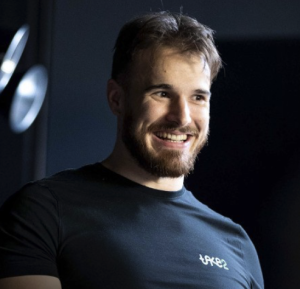
Felix Brandstetter
Trainer, Shoot Inside the Volume
Co‑Founder and Head of Virtual Production - Take 2 Studios (Salzburg)
Felix Brandstetter is Co‑Founder and Head of Virtual Production at Take 2 Studios in Salzburg, Austria’s first permanent LED volume for high‑end film and commercial work. As a VP supervisor and creative producer, he bridges directing, cinematography and technology, designing real‑world workflows that enable “Hollywood‑level” shoots with European crews and budgets. Together with his sister Viktoria, he has built Take 2 Studios from the ground up into a fully equipped virtual production space with an LED volume, cyclorama and infrastructure for international clients.
For Shoot Inside the Volume, Felix leads Wednesday 28 October 2026. The practical workshop explores lenses, lighting and digital environments: camera perspective, parallax, foreground integration and repeatable camera movement. Participants test their choices on the LED stage and build two shots with consistent light and screen direction. The Fantasy Studios team supports the Vicon tracking and robotic camera work. The studio operates normally throughout the day.
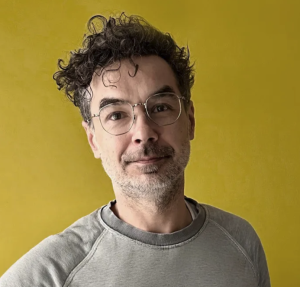
Lukáš Skalník
Consortium Representative, Trainer, Operate the LED Stage, Shoot Inside the Volume
CEO, Fantasy Studios
Lukáš Skalník is the Founder and CEO of Fantasy Studios, a Prague‑based studio specialising in virtual production, and the co‑founder of animation studio Eallin, which currently employs around 60 people in Prague, Tokyo and Bratislava. From 2010 to 2014, he served as Vice President of the International Quorum of Motion Picture Producers and took part in several international co‑productions. He has worked closely with the New York office of Amnesty International, producing the global campaigns “Standing up for Freedom” and “One More Voice”, and has collaborated with artists such as Peter Gabriel, Meryl Streep, Hans Zimmer, Wyclef Jean and Terry Gilliam of Monty Python.
As a producer, he has been behind numerous short animated films and series, documentary projects and co‑productions, including the international experimental feature Exquisite Corpse, which brought together 54 directors from 46 countries, and the 2023 feature documentary 15x15x5 Minisalon. Today, Lukáš leads Fantasy Studios, which has delivered virtual production for projects and brands such as AMC, Prime Video, Apple TV and TV Nova, and develops innovative workflows at the crossroads of animation, live‑action, virtual production and sustainable green filming.
In the Operate the LED Stage bootcamp, Lukáš brings a producer’s and studio founder’s perspective: he will show how an LED stage fits into the full production pipeline, how to use it to shoot smarter and more sustainably, and how to structure collaboration between clients, crew and the studio so that virtual production becomes a creative upgrade rather than a logistical headache.

Lukáš Fišárek
Trainer, Operate the LED Stage, Shoot Inside the Volume
Film Art Director & Virtual Production Supervisor
Lukáš Fišárek is a Czech film art director and virtual production supervisor with a strong background in film language, visual storytelling and in‑camera VFX on LED stages. He collaborates with Fantasy Studios as Art Director / VP Supervisor, designing the visual concept, layouts and digital backgrounds for productions shot directly in‑camera on their LED volume.
Coming from the film world, Lukáš has worked on author‑driven film projects, visual identities for TV and film formats, and award‑winning film posters, including a Czech Lion for best poster. He also teaches film language and visual storytelling at HAMU’s Nonverbal Theatre Department, helping directors and performers understand how images work on screen.
At Operate the LED Stage, Lukáš will focus on how to think like a filmmaker inside an LED volume: how to design and select backgrounds that support story and mise‑en‑scène, how to prepare content and layouts for in‑camera VFX in collaboration with directors and DOPs, and how to bridge classic film visual practice with real‑time virtual production workflows.
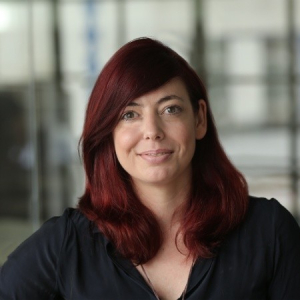
Odet Abadia Gomez
Trainer, Create Digital Worlds
Head, AI Future Imaging Research Center, Shanghai Vancouver Film School
Odet Abadia Gomez is a filmmaker, producer and educator with more than two decades of experience across film, advertising, documentary and emerging media. Originally from Spain and based in Shanghai, she has built an international career spanning commercial production, cultural storytelling and creative education.
Before leading AI research initiatives at Shanghai Vancouver Film School, Odet worked as a producer and executive producer on projects for global brands, broadcasters and international organizations including Coca-Cola, HSBC, Disney, Heineken, BBC StoryWorks and the World Health Organization. She is also the founder of Ampersand Films and has directed and produced documentary and educational projects exploring cultural and historical connections between Spain and China.
Today, Odet serves as Head of the AI Future Imaging Research Center at SHVFS, where she leads research into artificial intelligence, virtual production and immersive media. Her work focuses on evaluating emerging technologies, developing industry-relevant curricula and exploring how AI can be integrated into professional creative workflows across filmmaking, animation and interactive media.
At Digitalent Academy, Odet brings together extensive production experience and hands-on expertise with the latest generation of AI creative tools. Her teaching combines practical workflow design, critical thinking and creative experimentation, helping participants understand not only how these technologies work, but how they can be applied responsibly and effectively in professional production environments.
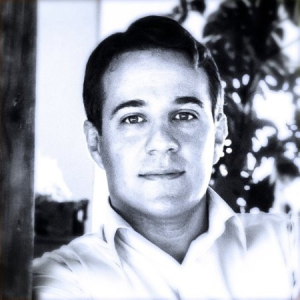
Åke Mora Temnerud
Trainer, Create Digital Worlds
Game Developer, Creative Technologist & Studio Leader
Åke Mora Temnerud is a multidisciplinary game developer, artist and creative technologist with nearly twenty years of experience across video games, apps and audiovisual media. Combining a background in illustration, animation and art direction with senior leadership roles in development and publishing, he brings a rare end-to-end understanding of the game creation process.
Throughout his career, Åke has held key positions including Head of Studio at Targnarion Studios, Director of Publishing at BitBox Games and COO at TwinForce. He has led teams of more than fifty people and contributed to projects across Nintendo DS, Nintendo Switch, PC, Xbox and mobile platforms, as well as AR and VR experiences. Today, his work focuses on AI-assisted creative workflows, full-cycle game development and creative technology consulting. Passionate about the intersection of art and technology, Åke continues to teach, develop personal projects and explore how emerging tools can expand the possibilities of interactive storytelling.At Digitalent Academy, Åke shares practical insights from both the creative and business sides of game development, helping participants understand how ideas evolve into finished products and how new technologies—including AI—are reshaping the future of interactive media.

Josep Antoni Ribas Rosselló
Trainer, Create Digital Worlds
VFX Supervisor, Lead Compositor & Digital Artist
Josep Antoni Ribas Rosselló is a VFX Supervisor, Lead Compositor and Digital Artist with more than a decade of experience in film, television and music video production. Throughout his career, he has worked on international projects across a wide range of genres and production scales, contributing visual effects and compositing expertise to feature films and television series.
His credits include Indiana Jones and the Dial of Destiny, The Irishman, Slow Horses, The Lion King, Captain Marvel, Black Panther, The Favourite and Lost in Space. These productions span major studio films, streaming content and high-end television projects, reflecting extensive experience within professional visual effects pipelines.
Based in Spain, Josep specializes in VFX supervision, high-end compositing and on-set virtual production. His technical skillset includes NUKE, Unreal Engine, Blender and other industry-standard tools used in contemporary visual effects workflows.
Alongside his production work, Josep has taught postproduction and visual effects at Animum VFX School and CEF Media Arts School in Spain, sharing practical industry knowledge with aspiring artists and technical professionals.
At Digitalent Academy, Josep brings experience from international film and television productions together with expertise in modern compositing, visual effects and virtual production workflows, providing participants with direct insight into contemporaryVFX practices and technologies.
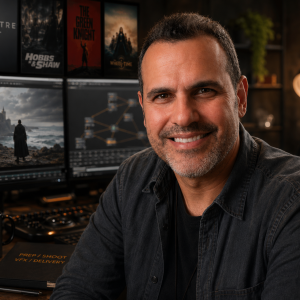
Roni Rodrigues
Trainer, Create Digital Worlds
Production VFX Supervisor
Roni Rodrigues is a Production VFX Supervisor with more than fifteen years of experience across feature films, high-end television and international productions.
Originally from Rio de Janeiro, Brazil, Roni began his career in the film industry working in production and editorial before relocating to the United Kingdom and specialising in Visual Effects. He graduated with distinction from the National Film and Television School (NFTS), where he focused on VFX and post-production workflows.
Since then, he has built an international career supervising visual effects on major studio and streaming productions, working closely with directors, cinematographers, production teams and VFX vendors from pre-production through final delivery.
His credits include Spectre, The Imitation Game, Fast & Furious Presents: Hobbs & Shaw, News of the World, The Green Knight, The Wheel of Time, Bridgerton, Queen Charlotte, Bob Marley: One Love and the Apple TV+/Skydance series 12 12 12.
Roni is particularly recognised for his production-side approach to visual effects, helping filmmakers integrate VFX seamlessly into the wider filmmaking process. His experience spans on-set supervision, virtual production workflows, environment integration, data capture, post-production strategy and cross-department collaboration.
Alongside his production work, Roni is a Visiting Tutor at Arts University Bournemouth (AUB) and an Industry Reviewer at the National Film and Television School (NFTS), where he supports the development of emerging artists and filmmakers.
At Digitalent Academy, Roni shares practical insights from real-world productions, focusing on what makes visual effects and virtual production workflows genuinely production-ready. His sessions explore the intersection of filmmaking, cinematography and VFX, helping participants understand how creative decisions translate into successful delivery on set and in post-production.
Paloma Urrutia
Trainer, Create Digital Worlds
Sustainability & International Development Professional
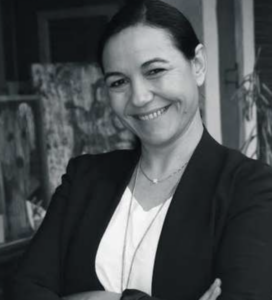
Paloma Andrés Urrutia is a sustainability and international development professional with more than 15 years of experience working as an entrepreneur and strategic and social consultant for companies, NGOs, public institutions and international development agencies. Her work focuses on creating practical solutions that connect social impact, sustainability and organizational strategy.
She is the founder of Fundación FUNCIONA, a centre dedicated to supporting people with disabilities living in extreme poverty, reflecting her long-standing commitment to social impact and inclusion. More recently, she has brought this experience into the audiovisual industry as co-founder of Mrs. Greenfilm and Fiction Changing the World, focusing on making sustainability an integral part of film and audiovisual production.
At Mrs. Greenfilm, Paloma works on sustainability applied to audiovisual productions and events, helping productions understand and reduce their environmental impact through rigorous data, realistic solutions and practical support throughout the production process. The company works with projects in Spain, Mexico and other countries, supporting productions in areas including ESG requirements, public funding opportunities and more efficient and responsible production models.
At Digitalent Academy, Paloma brings together her extensive experience in sustainability, social impact and strategic consulting with a practical understanding of the audiovisual industry. Her approach focuses on making sustainability measurable, achievable and relevant to real production environments, helping professionals understand how responsible practices can become an integral part of the creative and production process.
Ivan Garriga
Trainer, Create Digital Worlds
Filmmaker, Director, Producer & VFX Specialist
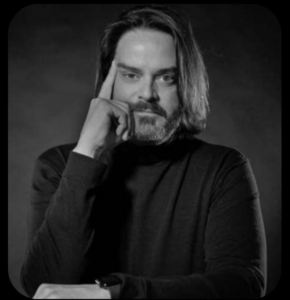
Ivan Garriga Simó is a filmmaker, director, producer and VFX specialist with more than 20 years of experience across advertising, film, television, music videos, documentaries and experimental audiovisual projects. Based in Barcelona, he combines creative direction and production with expertise in post-production, virtual production and emerging AI technologies.
In 2016, Ivan founded Pijama Studio, an AI and VFX post-production company working across advertising, fiction, music videos and digital content. Under his direction, the studio was nominated for Best Post-production Studio in Spain by the APCP in 2022. He has worked with global brands including Nike, Coca-Cola, Apple, Netflix, Audi, Microsoft, Sony, McDonald’s and Red Bull, among many others.
More recently, Ivan co-founded Caapsai, an AI-driven creative production lab where he works on AI and VFX workflows that combine traditional filmmaking with generative technologies. His expertise spans VFX supervision, virtual production, cinematography, colour grading and the development of efficient creative workflows that bring on-set production logic into post-production.
Since 2018, Ivan has also combined his professional career with university teaching at institutions including ELISAVA, ESCAC, LABASAD and UVic-UCC. At Digitalent Academy, he brings together decades of hands-on production experience with his knowledge of AI, VFX and virtual production, helping students understand how emerging technologies can be integrated into professional audiovisual workflows while maintaining strong creative and production standards.

Ramón Olivero
Trainer, Create Digital Worlds
Architect, CGI Artist, BIM Specialist & Technical Artist
Ramón Olivero is an architect, CGI artist, BIM specialist and technical artist with more than a decade of experience in architectural visualization, digital environments and real-time technologies. Originally from Venezuela, he graduated in Architecture from Universidad de Oriente in 2011 and began his career combining architectural design with 3D visualization and emerging digital tools.
He co-founded Métrica Estudio & Diseño Arquitectónico, where he led architectural visualization and worked across visual effects, animation, digitization and 3D technologies. He later became a Certified Autodesk Instructor and Certified Professional in Revit and 3ds Max, developing extensive expertise in BIM, architectural visualization and 3D modeling. From 2016 to 2019, he was part of the faculty at Universidad San Francisco de Quito, teaching BIM methodology and architectural visualization, while also working as a BIM consultant for architecture firms and businesses in Ecuador.
Since 2020, Ramón has expanded his practice into real-time technologies and technical art, specializing in Unreal Engine, V-Ray, Corona and other visualization tools. He has participated as an instructor and mentor in Epic Games’ Unreal Fellowship and worked on audiovisual projects for clients including Audi, HBO, ESA and Amazon Prime. He currently serves as Head of Studio and instructor at UT-HUB, where he teaches real-time environments, lighting, level design and 3D workflows.
At Digitalent Academy, Ramón brings together his architectural background, professional visualization experience and expertise in real-time technologies. His teaching focuses on practical production workflows, helping students and professionals bridge the gap between traditional architectural visualization and the evolving world of Unreal Engine and real-time 3D.

Alex CG Grau
Trainer, Create Digital Worlds
CG Supervisor & VFX Professional
Alex CG Grau is a CG Supervisor and VFX professional with more than twenty years of experience across feature films, high-end television and international productions. He has held senior roles including CG Supervisor, Associate VFX Supervisor, VFX Supervisor and Head of CG, combining hands-on work in lighting, look development and shot finaling with the leadership of teams of up to 28 artists.
His credits include The Buccaneers Season 2, Sentimental Value, Constellation, Queen Charlotte, Glass Onion, Foundation, The Wheel of Time, Fast X, Silo and News of the World, alongside more recent work on The Runner and Good People, Bad Things.
Alex works with Maya, Houdini, Houdini Solaris, USD-based workflows, Nuke, Unreal and Blender. His expertise spans asset development, lighting, FX, pipeline development and R&D. He brings a practical production approach to complex creative challenges, balancing image quality with schedules and technical requirements while supporting artists through mentoring and clear collaboration.
At Digitalent Academy, Alex shares insights into modern CG production, the collaboration between artists, supervisors and production teams, and how Houdini Solaris and USD are shaping contemporary VFX workflows.

Federico Luglio
Trainer, Create Digital Worlds
AI Film Director & Founder, AI Movie Awards
Federico Luglio is an AI film director, media producer, entrepreneur and multidisciplinary artist. He is the founder and director of the AI Movie Awards (AIMA) and founder of AIMA Productions, a Mallorca-based production studio focused on AI video production, digital storytelling, IP development and new forms of distribution.
Federico directed The Conclave, his debut AI-generated short film, which received 12 worldwide nominations and multiple international awards. His second short, 11:11, was produced in collaboration with China’s iQIYI platform, and in 2026 he co-directed Checkmate to the Death, a historical psychological thriller.
Before moving into AI filmmaking, Federico spent more than a decade in the international music industry as a producer, artist and founder of Double Cheese Records.
At DIGITALENT Academy, Federico will share his experience and perspective on the emerging possibilities of AI filmmaking and the future of AI-generated cinema.