




From Virtual Worlds to the Final Shot
Day 7 of the DIGITALENT Academy Bootcamp brought the entire week together in one exciting challenge: creating original film sequences on a virtual production stage.
Led by Lukáš Fišárek and Lukáš Skalník, the final workshop placed the technology directly in the hands of the participants. Working as small production teams, they developed their own visual concepts, prepared backgrounds in Unreal Engine or selected pre-recorded video content, and combined them with live performances, camera movement, lighting and practical elements on the set.


A major highlight was the programmable robotic camera arm. Participants learned how to mount and configure the camera, prepare the system and programme precise, repeatable movements. They could then immediately see how the movement of the physical camera interacted with the content displayed on the LED wall. The exercise demonstrated how careful coordination between the camera, lighting, performance and virtual environment can transform a technical setup into a convincing cinematic shot.
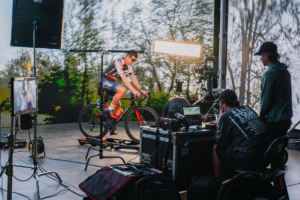

One of the central practical scenes featured a professional cyclist riding in front of a specially prepared moving woodland background. With the robotic arm capturing dynamic camera movements, the participants experimented with angles, lighting and timing to create the impression of a real journey through the landscape—all without leaving the studio.


Every participant also had the opportunity to work with their own content and creative ideas. Among the most visually distinctive examples was a scene by Slovak participant Lukáš Teren, who placed his performance inside a dramatic volcanic environment surrounded by lava. Polish participant Michal Sadowski chose a completely different direction, combining the robotic camera movement with a colourful, psychedelic background reminiscent of 2001: A Space Odyssey. These were just two examples of the many individual concepts that demonstrated how differently the same virtual production tools can be used.
Throughout the workshop, participants took on different production roles, programmed camera moves, adjusted lighting, worked with performers and props, and observed how every creative and technical decision affected the final image in real time.


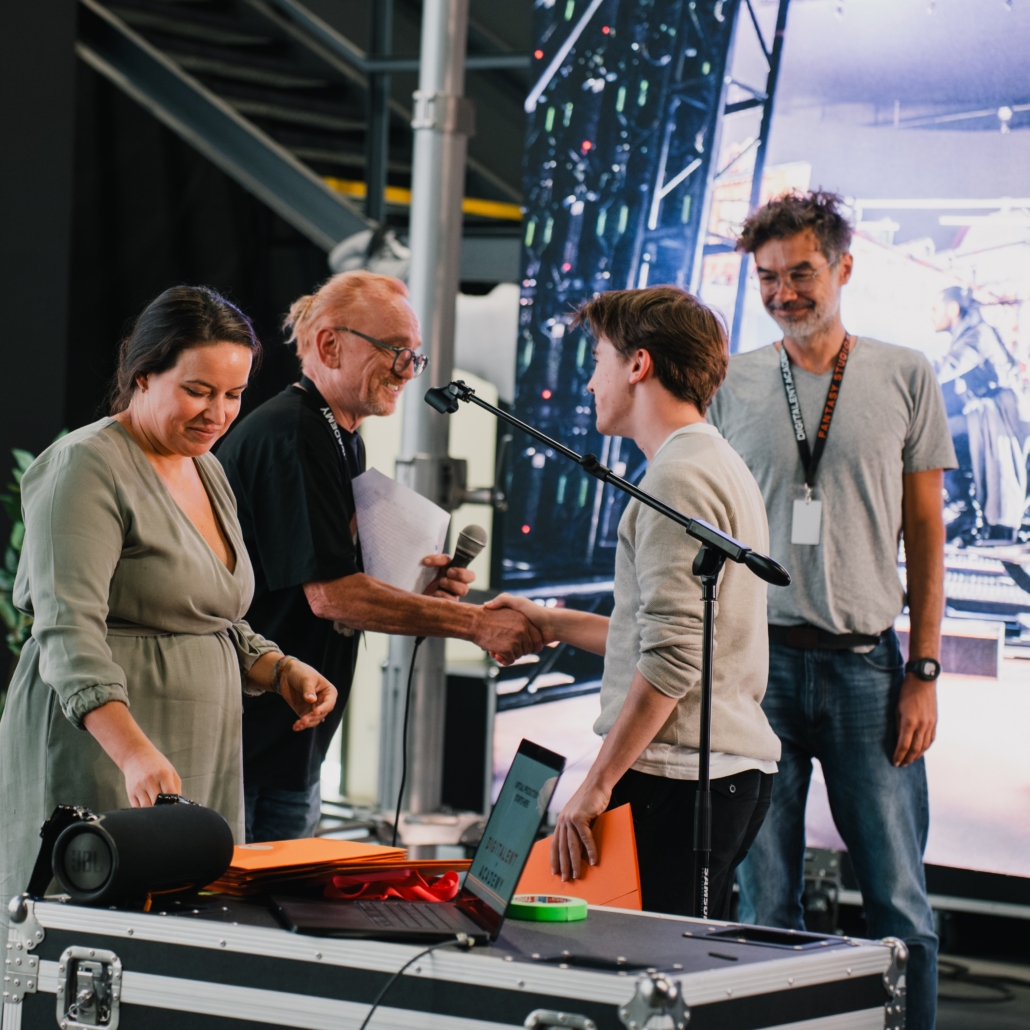
After lunch, the seven-day programme concluded with a certificate ceremony. Each participant received a Certificate of Completion, marking not only the successful completion of the intensive course but also a week of collaboration, experimentation and shared learning.
By the end of Day 7, participants had moved far beyond simply observing virtual production technology. They had used it to build, direct and shoot their own scenes—turning virtual worlds into real cinematic images and bringing the first DIGITALENT Academy Bootcamp to a memorable close.

Leave a Reply
Want to join the discussion?Feel free to contribute!